Neem & Nature
The bitterness scale: neem, karela, methi and what bitter compounds do
08 Oct 2026 • Neemyukt Research Team
Bitter plants get grouped together as though bitterness were one ingredient. Neem, karela and methi sit in that group in most Indian households, and the assumption follows that they must share some common active principle. Chemically they have almost nothing in common. Each one arrived at bitterness by evolving a different class of defence molecule, and those classes behave very differently once they leave the plant.
That difference is the whole story for skincare. Neem's bitter compounds travel into cosmetic formulas and the other two largely do not, for reasons of solubility rather than tradition. Everything below stays on the botany and on topical use.
In short: Neem is bitter because of limonoids such as azadirachtin and nimbin, karela because of cucurbitacins, and methi mainly because of steroidal saponins. All three are defence compounds a plant makes to discourage something from eating it. Bitterness is an alarm your tongue reads, not a measure of how useful a plant is on skin.
Bitterness is a sensation, not a chemical family
Humans carry roughly twenty five types of bitter taste receptor, and between them they respond to molecules with no structural relationship to one another. That breadth is the point. Bitterness evolved as a broad warning that a plant may be worth avoiding, not as a label for one compound. So a bitterness scale across neem, karela and methi is really a scale across three unrelated chemistries that happen to trip the same alarm.
There is no agreed ranking to quote. Published comparisons measure bitterness against quinine rather than against each other. What can be said confidently is that cucurbitacins, the karela compounds, are among the most intensely bitter natural substances known and register at very low concentrations, while fenugreek's saponin bitterness is milder and tends to linger rather than hit.
| Neem | Karela | Methi | |
|---|---|---|---|
| Plant family | Meliaceae (mahogany) | Cucurbitaceae (gourds) | Fabaceae (legumes) |
| Main bitter compounds | Azadirachtin, nimbin, nimbidin, salannin | Cucurbitacins, momordicosides | Steroidal saponins, trigonelline |
| Chemical class | Limonoids, from a triterpene skeleton | Cucurbitane triterpenoids | Saponins, from a steroid skeleton |
| Concentrated in | Seed kernel, less in leaf and bark | Fruit and seed | Seed |
| Apparent target | Insects | Generalist herbivores, insects and mammals | Insects, fungi and grazers |
| Behaviour in a formula | Partly carried by the oil; varies by compound and pressing | Rarely used, irritant | Water-soluble, foams |
One practical consequence shows up straight away. The Neem Aloe Face Wash, water-based and at pH 5, can only carry what dissolves in water and in its surfactant system. A Neem and Tulsi Glycerin Soap Bar, ₹499 for 100g, is a different chemistry again, built from saponified oils. Neither is a measured dose of any bitter compound, and that is the right way to read a neem label. The soap bar is in stock at ₹499; the face washes are ₹549 and ₹599 and still pre-launch, so those pages take a waiting-list entry.
What each plant is actually defending itself against
Neem: limonoids aimed at insects
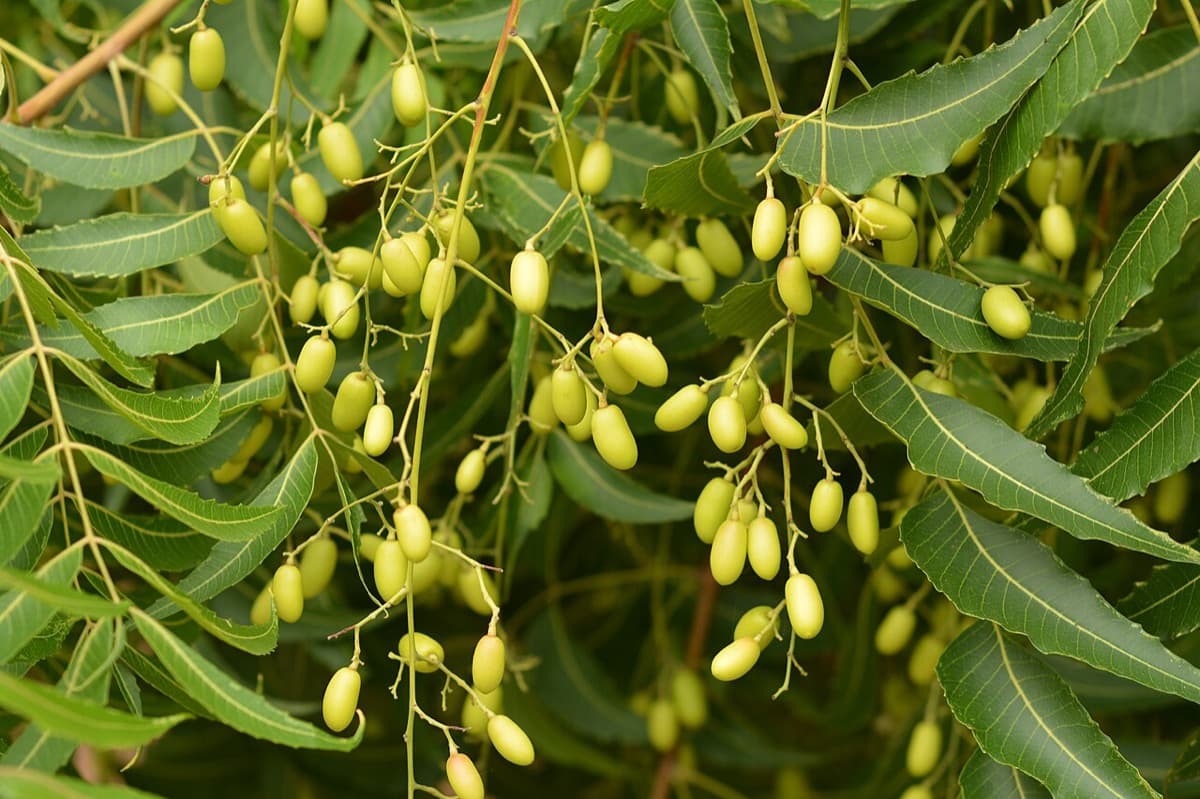
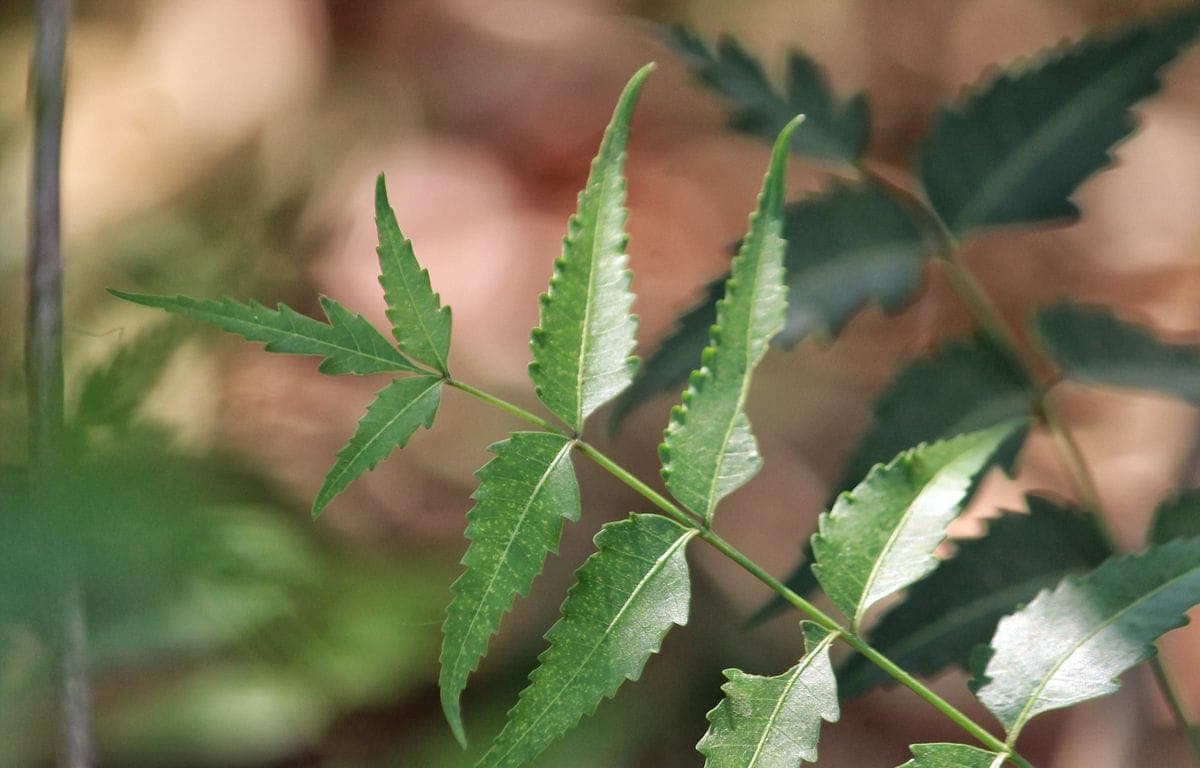
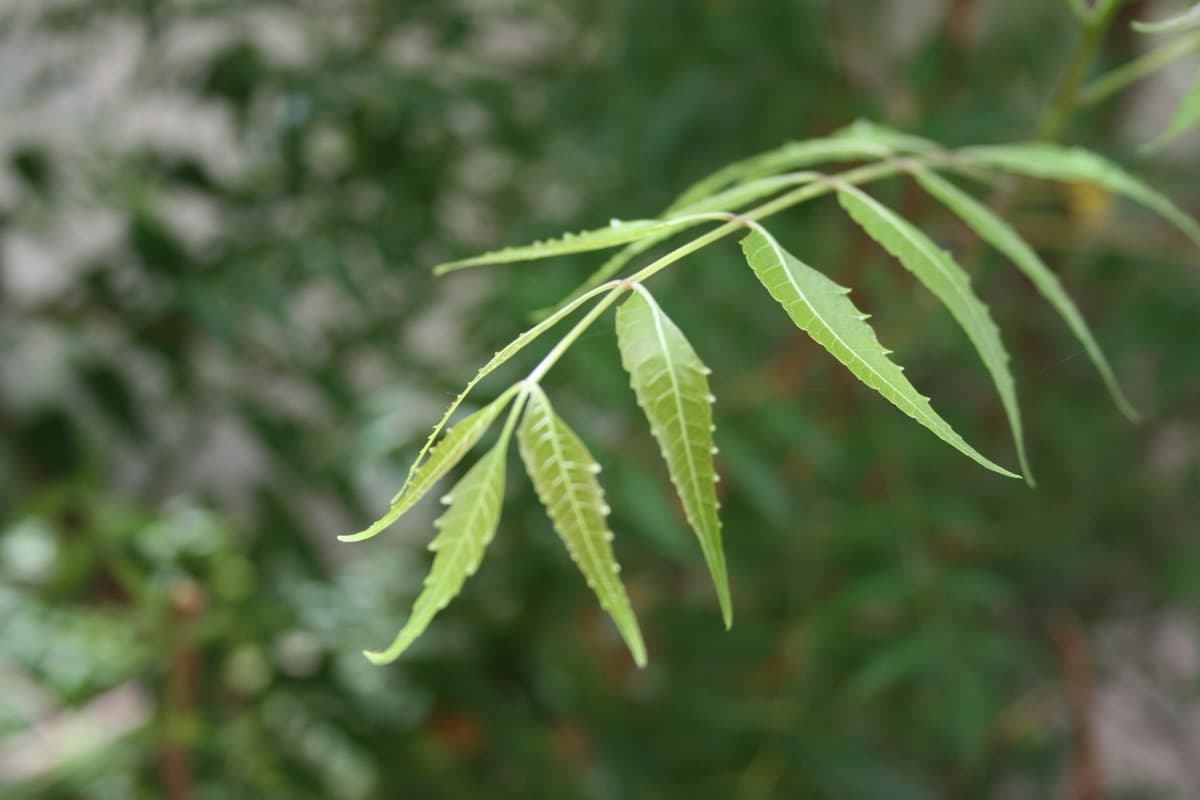
Neem's bitter principles are limonoids, heavily oxygenated molecules built on a triterpene skeleton. Azadirachtin is the best studied. It puts many insect species off feeding and interferes with the hormones that control moulting, so larvae struggle to develop. Nimbin, nimbidin and salannin sit alongside it, and azadirachtin and nimbin covers the first two in detail.
Limonoids are a family trait rather than a neem invention. They are characteristic of the mahogany family and of the related citrus family, which is why citrus seeds turn bitter too. Bakain, a Meliaceae cousin often mistaken for neem, makes its own quite different limonoids. Bitterness is also separate from the famous smell, which comes mostly from sulphur compounds, as why neem smells so strong explains.
Karela: cucurbitacins aimed at mammals
Bitter gourd belongs to the cucumber family and makes cucurbitacins, triterpenoids built on a different skeleton from limonoids. They deter a broad range of plant-eaters, insects and mammals alike, and the deterrent works at concentrations low enough that a trace ruins a mouthful. Levels climb when a plant is stressed, which is why an occasional gourd or cucumber from an ordinary patch turns unexpectedly sharp. The defence is not airtight either: some specialist beetles have turned the signal around, using cucurbitacins as a feeding cue and storing them for their own protection. In cosmetics these compounds are rare, thinly characterised on human skin and irritant enough that nobody is rushing to formulate with them.
Methi: saponins that behave like soap
Fenugreek's bitterness comes largely from steroidal saponins, with the alkaloid trigonelline adding to it. Saponins are natural surfactants. Shake them with water and they foam, which is useful in a formula even though it has nothing to do with taste.
Two common misreadings are worth correcting. The maple-like smell of methi is not a bitter compound at all but an aroma molecule called sotolon. The slip that makes soaked methi seed popular in hair masks comes from galactomannan mucilage, a soluble fibre, rather than from the saponins. Fenugreek saponins do yield diosgenin, which industry once used as a starting material for manufacturing steroid drugs, but that conversion happens in a factory and not on skin.
Does bitterness predict anything useful on skin?
Very little. What decides whether a plant compound reaches your skin is solubility, stability and how the product was made. Some limonoids, nimbin and salannin among them, travel with cold-pressed neem oil, while azadirachtin is more polar and much of it stays in the seed cake. Meanwhile heavy refining and deodorising strip a good share of them along with the smell, a trade-off set out in how neem oil is made. Saponins are water-soluble and foam. Cucurbitacins mostly stay out of the bottle.
One thread is genuinely interesting. Researchers have reported bitter taste receptors in tissues well outside the mouth, including human skin cells, and laboratory groups have begun asking what they do there. It is early work, and no cosmetic claim should rest on it yet.
The counterweight deserves equal space. Defence chemistry is defensive against us as well. Botanical extracts are a recognised cause of allergic contact dermatitis, and the American Academy of Dermatology describes how such a reaction can appear even after months of comfortable use. Patch test anything new on the inner forearm and give it 48 hours.
Choosing a neem product without chasing bitterness
Treat bitterness as a marker of plant identity, not of product strength. A sharply bitter, strongly smelling neem material usually just means less refining. Finished cosmetics are diluted, buffered and preserved, and the formula does the work.
Pick by the job instead. For daily cleansing, a face wash gives you control over frequency and a clean rinse-off. One goes further: the Neem Ubtan Face Wash, made with turmeric, chickpea and sandalwood, suits anyone who prefers a traditional ubtan-style blend in their daily cleanser. A glycerin soap bar makes more sense for body use. All of them are supportive, and none of them will resolve a medical skin problem on its own. Acne that will not settle, dandruff that keeps returning or a rash that spreads needs a dermatologist, who may suggest proven options such as adapalene or benzoyl peroxide. Neem oil concentrates should never be swallowed, and should be kept away from the eyes and out of reach of children.
Frequently asked questions
Is a more bitter neem product a stronger one?
No. Bitterness in a raw material roughly tracks how much limonoid survived processing, but a finished cosmetic is diluted and balanced for skin. Taste and smell are not a potency dial.
Why do citrus seeds taste bitter in a similar way to neem?
They share a compound class. The citrus family and the mahogany family neem belongs to are related, and both produce limonoids. Citrus bitterness comes mainly from limonin.
Do karela and methi have any real place in skincare?
Methi turns up in hair preparations, mostly for its mucilage rather than its bitter saponins. Karela is uncommon in cosmetics. Neither has a strong body of human skin evidence behind it.
Can I grind these plants into a paste at home instead?
You can, but you give up the controls that matter: concentration, preservation and hygiene. Fresh plant pastes spoil quickly and concentrate the same defence compounds that cause contact reactions. Keep any attempt brief, patch test first and stop at the first sign of stinging.