Neem & Nature
Is That Really a Neem Tree? Telling Neem From Bakain and Curry Leaf
23 Aug 2026 • Neemyukt Research Team
A neighbour points at a tree in the lane and calls it neem. Often it is. Sometimes it is bakain, and now and then it is the curry leaf plant half of India calls meetha neem. Telling them apart takes half a minute, and it matters, because one lookalike carries fruit that is unsafe to eat.
In short: True neem (Azadirachta indica) has odd-pinnate leaves whose leaflets curve like small sickles, sit lopsided on the stalk and carry toothed edges. Bakain (Melia azedarach) has leaves that divide a second or third time; its flowers are lilac and its round yellow fruit should never be eaten. Curry leaf (Murraya koenigii) is not a neem at all; crush one leaflet and the kitchen aroma settles it.
How to read a neem leaf
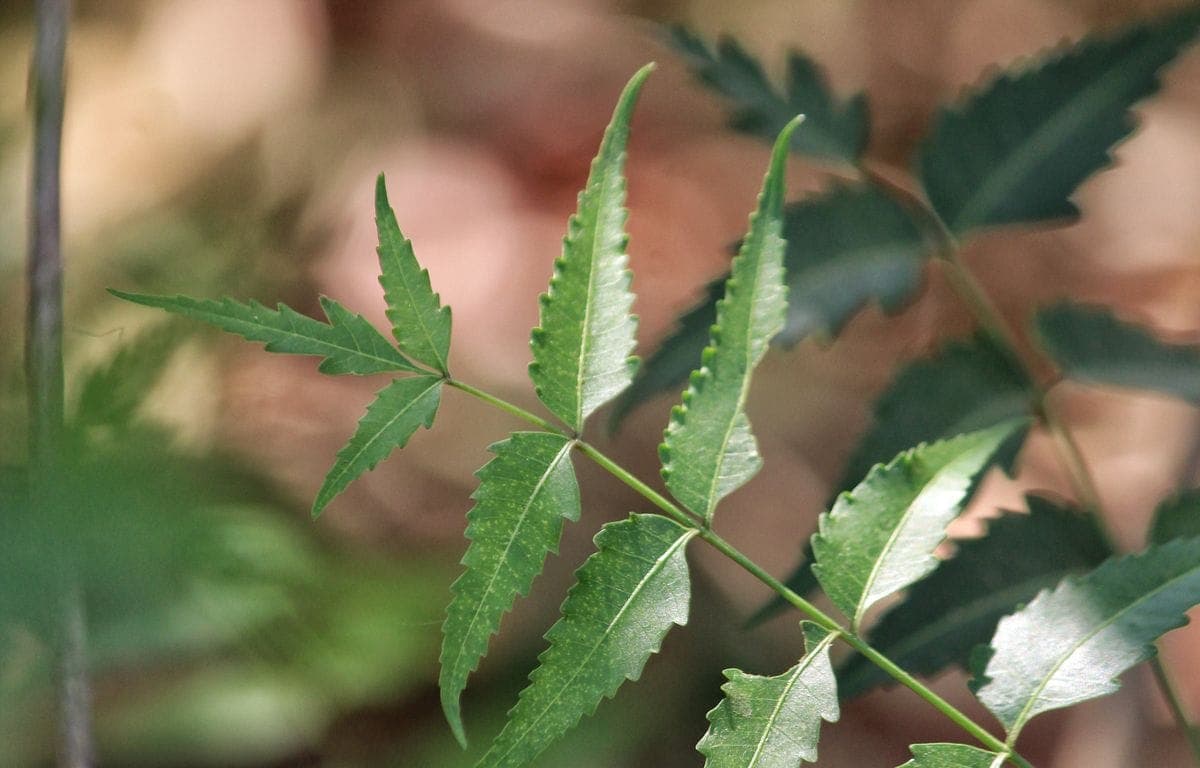
The leaf is your fastest check, and structure is what to read, not colour. A neem leaf is compound: one central stalk carrying paired leaflets, usually with a single leaflet at the tip, which botanists call odd-pinnate. That central stalk never branches.
A single leaflet gives you three checks.
- The blade curves to one side, like a blunt sickle.
- The base is uneven, so the two halves look mismatched.
- The margin is coarsely toothed, not smooth.
New growth flushes coppery red before turning deep green. Chew a fragment and bitterness arrives at once, though that proves little, since bakain is bitter too. Before picking anything, it helps to know that leaf, seed, bark and twig each do different work.
Bakain looks like neem until you open the leaf
Bakain, also called dharek, Persian lilac or chinaberry, sits in the same botanical family as neem, so the resemblance is real. Both carry greyish, fissured bark on a spreading open crown, and mature bark alone will not separate them reliably.
The leaf breaks the tie. In bakain the central stalk branches, and those branches carry the leaflets, sometimes branching once more. Botanists call this bipinnate or tripinnate; in the hand it simply looks feathery and far more divided.
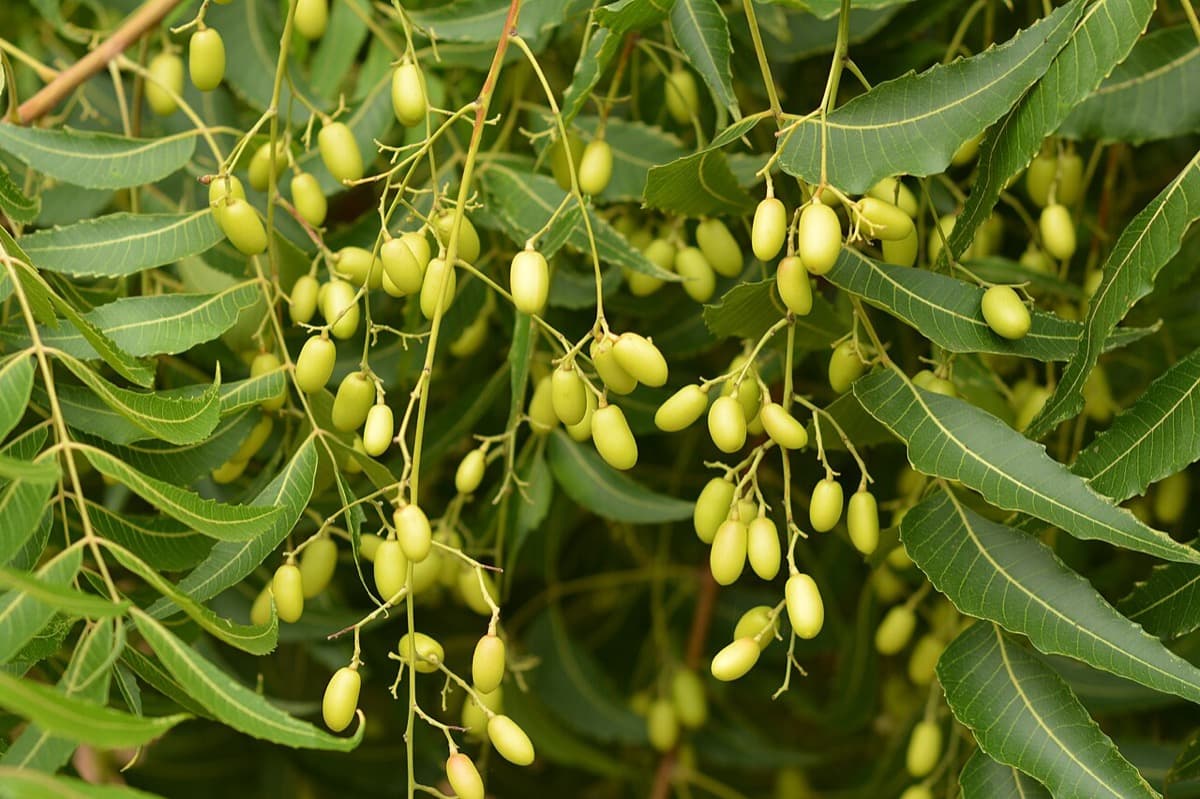
Flowers and fruit confirm it. Showy lilac to purple sprays appear in spring, while neem's flowers are small, white and heavily fragrant. The bakain fruit is a round yellow-tan drupe, the original "chinaberry", clinging to bare branches into winter; neem fruit is an olive-shaped drupe ripening in the monsoon.
Bakain berries are toxic: what to do if a child eats one
Bakain fruit is regarded as toxic to humans, especially young children, and poisoning has also been reported in pigs and other animals. Reported effects after ingestion include vomiting, abdominal pain and neurological symptoms. If a child has eaten unknown yellow berries, follow standard poisoning first-aid guidance and act immediately:
- Get medical help at once — the nearest hospital emergency department, or a poison information centre. Do not wait for symptoms to appear.
- Do not induce vomiting.
- Do not attempt any home remedy.
- Carry a sample of the leaf and fruit so the doctor can identify the plant.
Is curry leaf a kind of neem?
No. Curry leaf belongs to the citrus family and shares only a nickname with neem. It grows as a shrub or slender tree, and its leaves are compound like neem's, which is how the confusion starts. The leaflets, though, are small, glossy and at most faintly scalloped, never coarsely toothed, and crushing one releases the aroma you know from tempering dal. Neem smells green and bitter instead.
Kadi patta is food. Substituted into a preparation meant for neem, it gives you an aromatic paste and nothing more.
Three trees side by side
| Feature | Neem | Bakain | Curry leaf |
|---|---|---|---|
| Leaf | Once-divided, toothed, sickle-shaped | Twice or thrice divided, feathery | Compound, small glossy aromatic leaflets |
| Bark | Grey, fissured, spreading crown | Grey, fissured — very similar to neem | Thin-stemmed shrub or slender tree |
| Flower | Tiny, white, fragrant | Showy lilac clusters | Small white clusters |
| Fruit | Olive-shaped drupe, yellow when ripe | Round yellow drupe, persists in winter | Small berry ripening black; pulp eaten, seed not |
| Safety | Leaf traditionally used; wash first | Fruit toxic, keep from children | Culinary; leaf safe, do not swallow the seed |
Where each tree grows and when it flowers
Geography narrows things down before you reach the leaf. Neem thrives in hot, dry plains across Rajasthan, Gujarat, the Deccan, Uttar Pradesh and Tamil Nadu, flowering around March to May and fruiting through the monsoon.
Dharek is commonest in Punjab, Himachal Pradesh, Jammu and the Himalayan foothills, but it is planted as an avenue, garden and farm tree across the country, so do not rule it out by region. It flowers in early spring and holds yellow fruit after the leaves fall, which is exactly when children notice it.
Why identification matters for home preparations
Picking leaves yourself means doing your own quality control. Wash anything gathered from a roadside tree thoroughly, since urban leaves collect dust and exhaust residue, and prefer trees set back from traffic. Note too that neem seed and seed oil are for external use and are not a home matter internally, especially for infants. Sensible limits apply either way, as covered in our guide to using neem safely day to day.
This is the plain reason standardised products exist: the plant material is verified, so nothing rests on which tree grew nearest your gate. A purifying option for everyday washing is the Neem & Tulsi Glycerin Soap Bar, which supports a routine rather than replacing treatment. If you would rather work with raw material without carrying the identification risk yourself, a cold-pressed virgin neem concentrate starts from verified seed. To judge formulations for yourself, learn how much neem a label actually promises.
Frequently asked questions
Can I identify neem by taste alone?
No. Bakain leaves are bitter as well, so taste only tells you that you are probably holding one of the two. Read the leaf structure instead, because a branching central stalk rules neem out immediately.
Is meetha neem useful the way neem is?
Curry leaf is a culinary herb valued for flavour, and it does not substitute for neem in any preparation. The two plants are not related, and the shared name is the only thing they have in common.
What if a child swallows bakain berries?
Seek medical attention immediately and take a sample of the leaf and fruit along. Do not wait for symptoms and do not attempt any home treatment.
Are neem leaves from a street tree safe to use?
Wash them well in running water first, because roadside leaves carry dust and traffic residue. Choose trees away from busy roads, and read more about neem's traditional role in Indian households.