Neem & Nature
Neem seeds vs neem leaves: two very different ingredients
28 Sept 2026 • Neemyukt Research Team
Say "neem" on a product label and most people picture one thing: a bitter, green, faintly medicinal ingredient. In practice, the word covers at least two very different materials. Neem seeds are pressed into a thick, pungent oil. Neem leaves are dried, powdered, steeped or extracted into something far lighter. They come from the same tree, but in a bottle they behave almost like strangers.
If you have already read our overview of which part of the neem tree does what, this post goes one level deeper: what each ingredient actually feels like, where it sensibly belongs, the safety rules that apply to each, and how to tell from an ingredient list which one you are buying.
In short: Neem seed oil is a fatty, bitter, strong-smelling oil that is used in small, diluted amounts on skin and hair and must never be swallowed. Neem leaf is usually sold as a water- or glycerin-based extract, a home infusion or a dry powder, and it is lighter and milder in feel. On a label, look for the words "seed oil" or "leaf extract" after the botanical name to know which one you have.
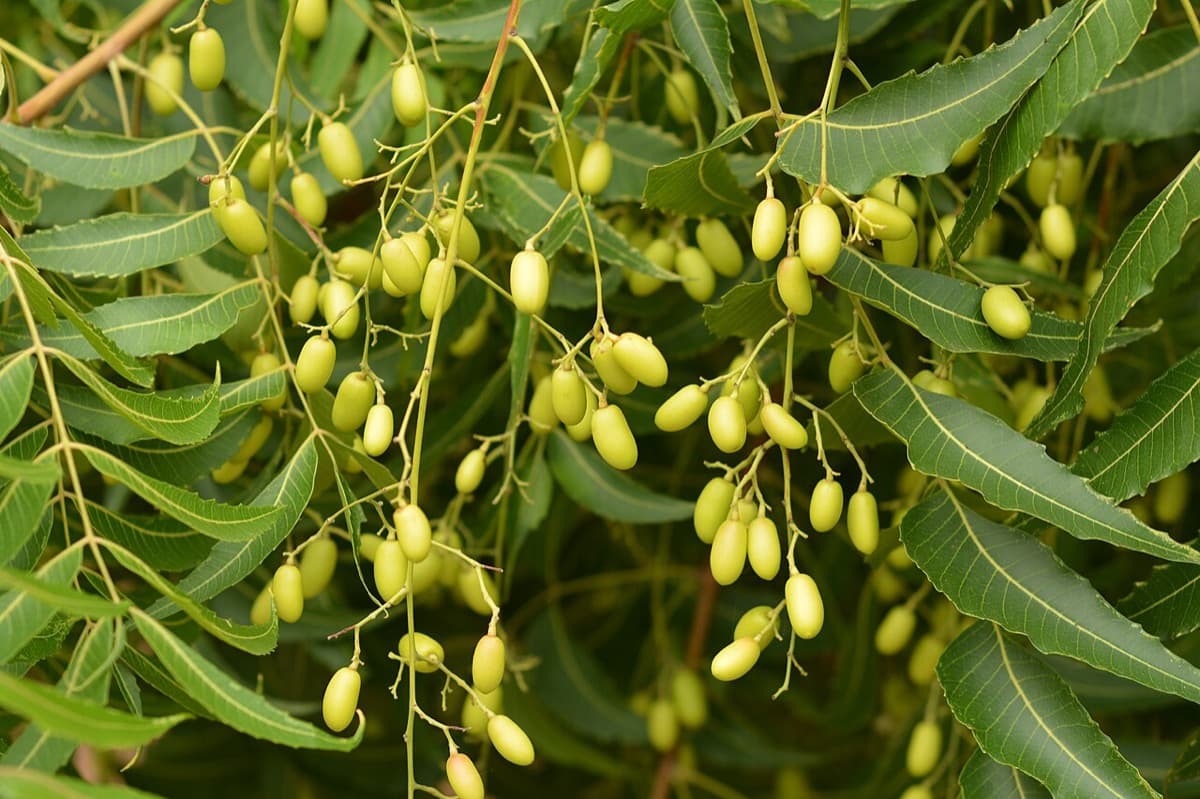
What actually comes out of a neem seed?
The seed kernel is rich in fat, which is why it is pressed rather than steeped. The result is a dense, yellowish-brown to dark oil with a smell often described as garlicky or sulphurous, and a taste so bitter that it lingers. Many of the compounds neem is best known for, including azadirachtin, are concentrated in the seed, which is part of why the oil is so potent in character. For the details of pressing and why cold-pressed oil differs from refined, see how neem oil is actually made.
A few practical traits follow from this. Neem oil thickens and can turn cloudy or semi-solid in cool weather, then liquefies again when warmed. It is heavy on the skin and does not vanish the way a light serum does. And because it is so concentrated, it is almost always used diluted: a few drops in a carrier oil, or a modest share of a finished formula, rather than applied neat over large areas.
If you want to work with the oil itself, a cold-pressed neem concentrate is meant to be blended into a carrier, not used straight from the bottle. Patch-test any new dilution on the inner arm for a day or two before wider use.
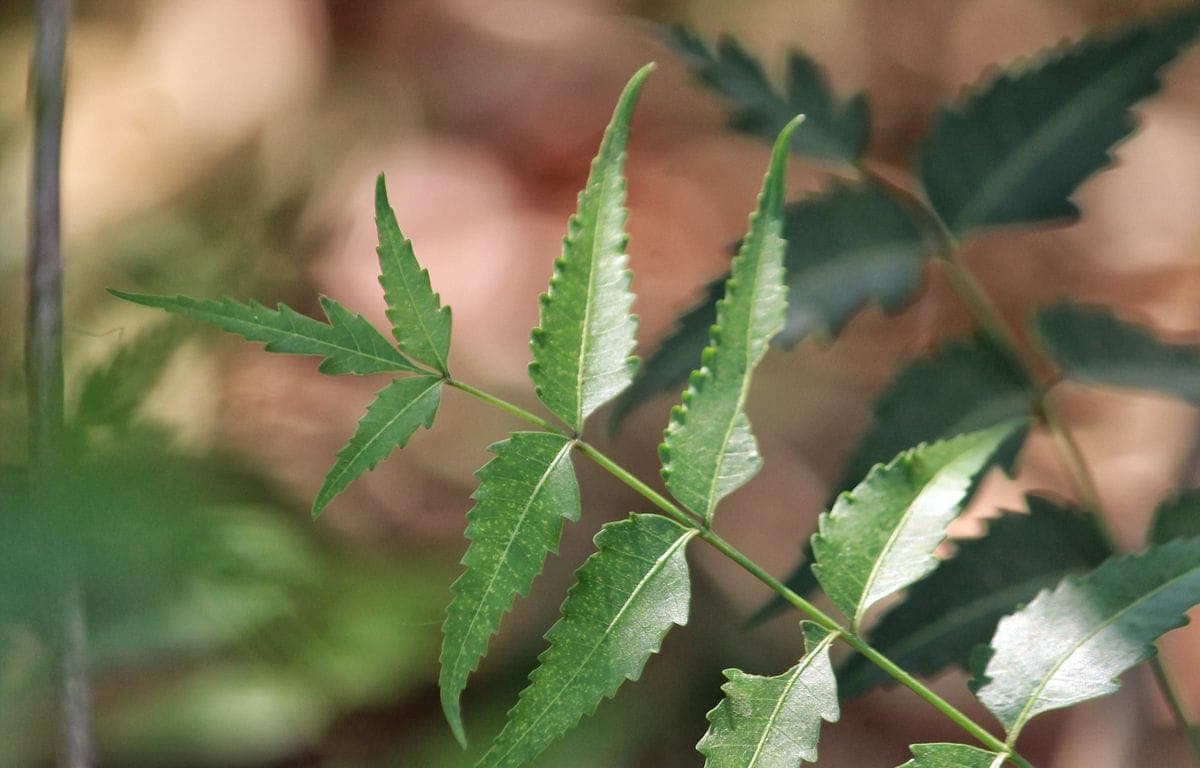
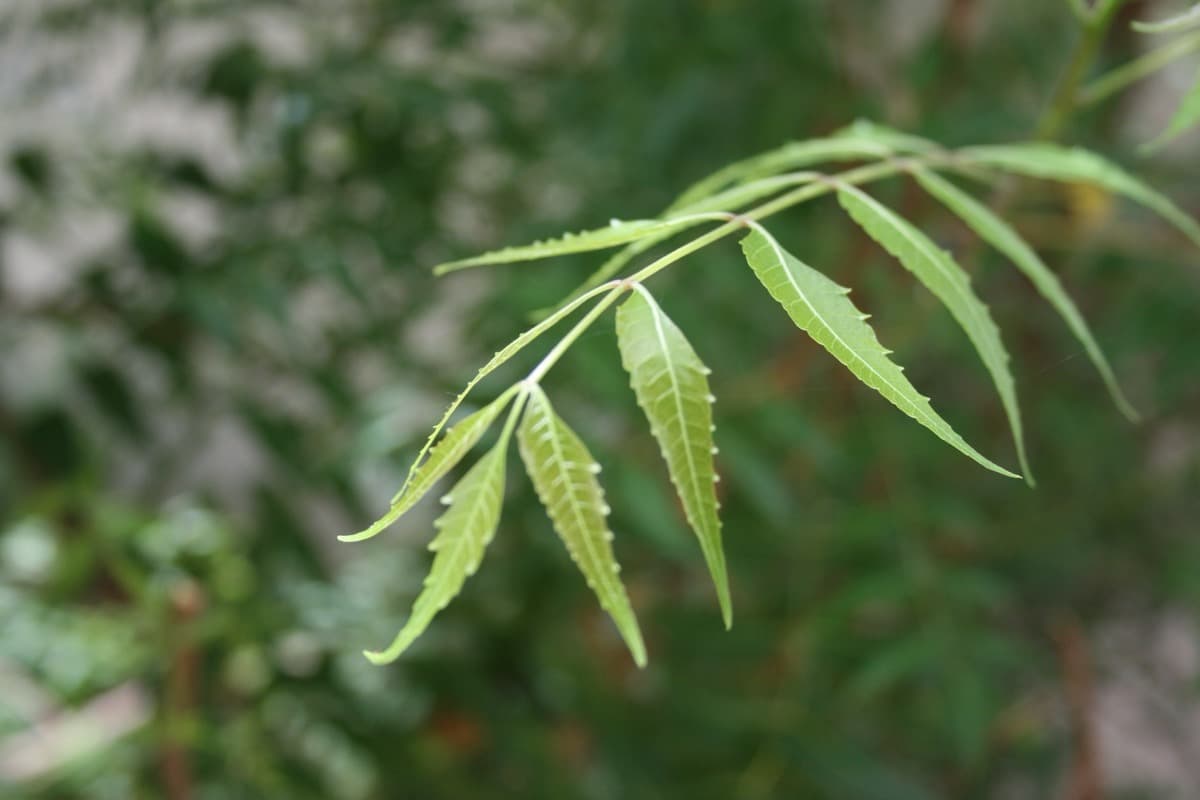
And what comes out of a neem leaf?
Leaves hold far less fat and far more water, so they are handled differently. At home, fresh leaves are boiled or steeped to make a pale green-brown infusion, or dried and ground into a fine powder for face packs. In manufacturing, leaves are typically extracted into water, glycerin or a similar solvent, giving an ingredient that mixes easily into gels, toners and face washes.
Leaf preparations have a smell too, but it is grassier and softer than the seed oil's. Texture is the biggest difference: a leaf extract disappears into a watery formula, while leaf powder is gritty until mixed with water, curd or rose water. That makes leaf the more natural fit for rinse-off and lightweight leave-on products, where a heavy oil would feel out of place.
One caution with homemade leaf water: it has no preservative, so it spoils quickly; use it the same day. Make small batches and discard anything that smells off or looks cloudy.
Side by side: how the two compare
| Feature | Neem seed (oil) | Neem leaf (extract, infusion, powder) |
|---|---|---|
| How it is made | Seed kernels pressed for oil | Leaves steeped, extracted into water or glycerin, or dried and ground |
| Texture | Thick, oily, may solidify in cold weather | Watery liquid or fine dry powder |
| Smell | Strong, garlicky, sulphurous | Milder, grassy, herbal |
| Typical use | Diluted in hair oils, body oils, balms and soaps | Face washes, toners, gels, face packs, bath water |
| How much is used | Small amounts, always diluted | Varies widely with the formula |
| Swallowing | Never | Not recommended without medical advice |
| Label wording | Azadirachta Indica Seed Oil | Azadirachta Indica Leaf Extract or Leaf Powder |
Why does safety differ between them?
The single most important rule is that neem oil is for external use only. It should never be swallowed, and it must be stored well out of reach of children. Poisoning reports describe serious reactions in infants and young children who have swallowed neem oil, so treat it like any other household product that must be kept locked away. If a child swallows any, contact a doctor or poison-control service straight away; MedlinePlus, the US National Library of Medicine's consumer health resource, has general guidance on what to do. Keep the bottle capped, labelled and on a high shelf, and do not decant it into anything that looks like a drink or food container.
Leaf preparations are generally considered gentler on the skin, but "gentler" is not the same as risk-free. Any plant ingredient can irritate or trigger an allergic reaction in some people. Leaf-based products are also not a reason to start drinking neem water or eating leaves for health purposes; if you are pregnant, trying to conceive, managing diabetes or taking regular medication, speak to a doctor before using neem internally in any form.
For skin, the same good habits apply to both. Patch-test, start with low amounts, and stop if you notice redness, burning or itching. If a skin problem is persistent, spreading or painful, see a dermatologist. Neem is a supportive ingredient in a routine, not a substitute for proper diagnosis, and conditions such as fungal infections or severe acne may need prescription treatment.
How to tell which one a product uses
The front of a pack often just says "neem". The ingredient list on the back is where the answer sits. Cosmetic ingredient lists in many markets use standardised botanical names, and neem appears under its Latin name, Azadirachta indica, sometimes written as Melia azadirachta. The word that follows is the clue.
Words that point to seed
"Seed oil" is the clearest signal. A plain "neem oil" listing almost always means seed oil too, since oil is not pressed from the leaf. Seed oil turns up most often in hair oils, balms, body oils and cold-process soaps. A blended hair oil such as neem bhringraj hair oil is a typical example of neem used in diluted form.
Words that point to leaf
"Leaf extract", "leaf powder" or "leaf water" tell you the leaf was used. Look nearby for the solvent, such as water (aqua), glycerin or propylene glycol, since leaf extracts are often supplied pre-dissolved. You will see these in face washes, toners and gels. Water-based cleansers, such as a neem and aloe face wash, are a common everyday format; whichever neem form a product uses, its ingredient list is where you confirm it.
Position on the list
Ingredients are generally listed in descending order of amount, so neem near the end of a long list is usually a small share of the formula. Our guide to how much neem is actually in your neem product explains how to read that position sensibly without over-reading it. Some products contain both seed oil and leaf extract, and that is perfectly reasonable: each does a different job in the formula.
Frequently asked questions
Is neem leaf extract weaker than neem oil?
"Weaker" is not quite the right word. They contain different mixes of compounds in different concentrations, so they are not directly interchangeable. Seed oil is more concentrated in character and needs dilution; leaf extract is milder in feel and suits water-based products.
Can I swap neem oil for neem leaf powder in a face pack?
Not one-for-one. A face pack relies on powder for body. If you want to add oil, use only a drop or two mixed well into the pack, and patch-test first.
Why does my neem oil go solid in winter?
Neem seed oil contains fats that firm up at cooler temperatures. Standing the closed bottle in warm water for a few minutes loosens it. This is normal and does not mean the oil has gone bad.
Is it safe to use neem products around children?
Store neem oil where children cannot reach it, and never give it by mouth. For using any neem product on a child's skin, ask a paediatrician or dermatologist first.