Neem & Nature
Neem vs Persian lilac: a field guide for the confused
08 Oct 2026 • Neemyukt Research Team
Two trees get confused so routinely in India that nobody notices any more. One is neem, botanical name Azadirachta indica. The other is Melia azedarach, known across the north as bakain or dharek and in English as Persian lilac. Same family, similar feathery leaves, both flowering in spring, both bitter, and from a few metres away they read as one tree.
They are not interchangeable, and one of them is dangerous to eat. Persian lilac fruit has a documented record of poisoning children and farm animals. Checking which tree you have takes half a minute, and the question has a commercial edge: a loose sack of neem oil in a market declares no species, no seed source and no pressing date. Part of the price of a cold-pressed virgin neem concentrate at ₹1,299 for 30ml should buy a supply chain that can answer all three, so ask the seller for them. The concentrate is pre-launch, so its page takes your details rather than an order.
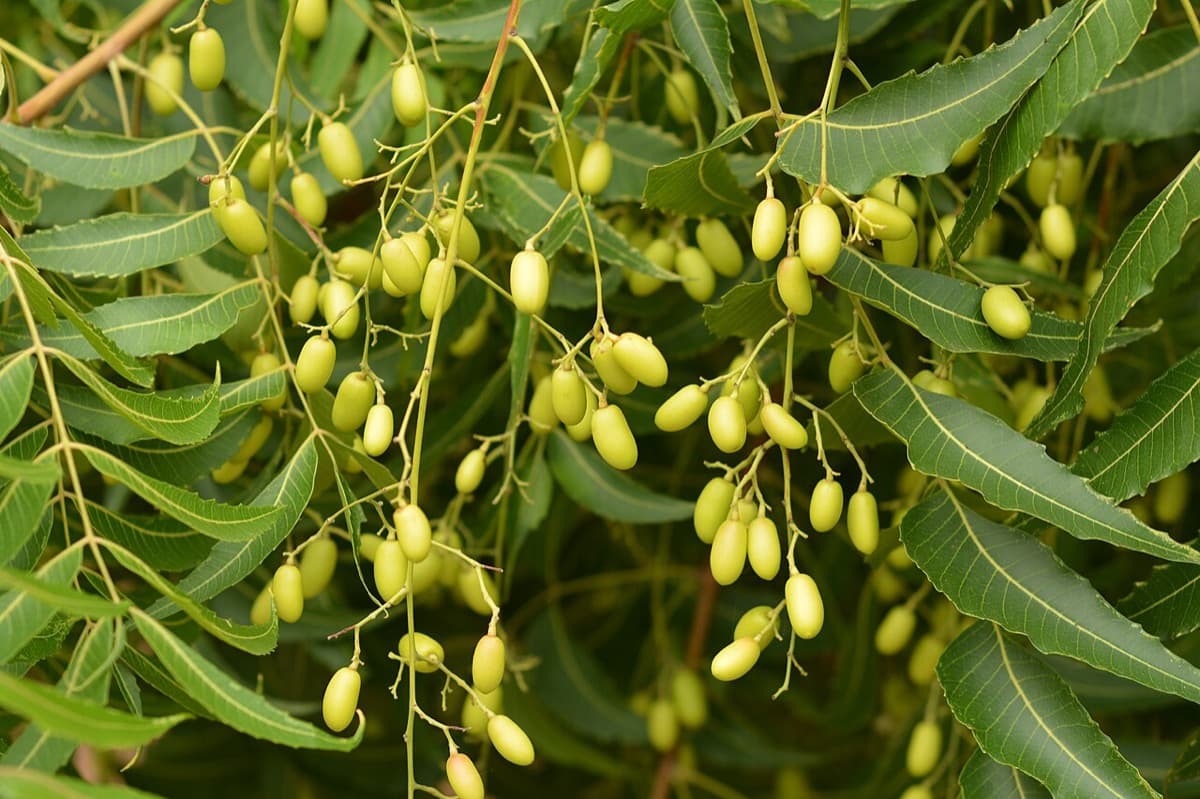
In short: Neem leaves divide once, its flowers are white and its fruit is a soft olive-shaped drupe with one seed. Persian lilac leaves divide twice or three times and look lacier, its flowers are lilac with a dark purple tube, and its yellow berries hang on bare winter branches. The fruit is poisonous if swallowed, so never taste a tree to identify it.
How do you tell the two apart in the field?
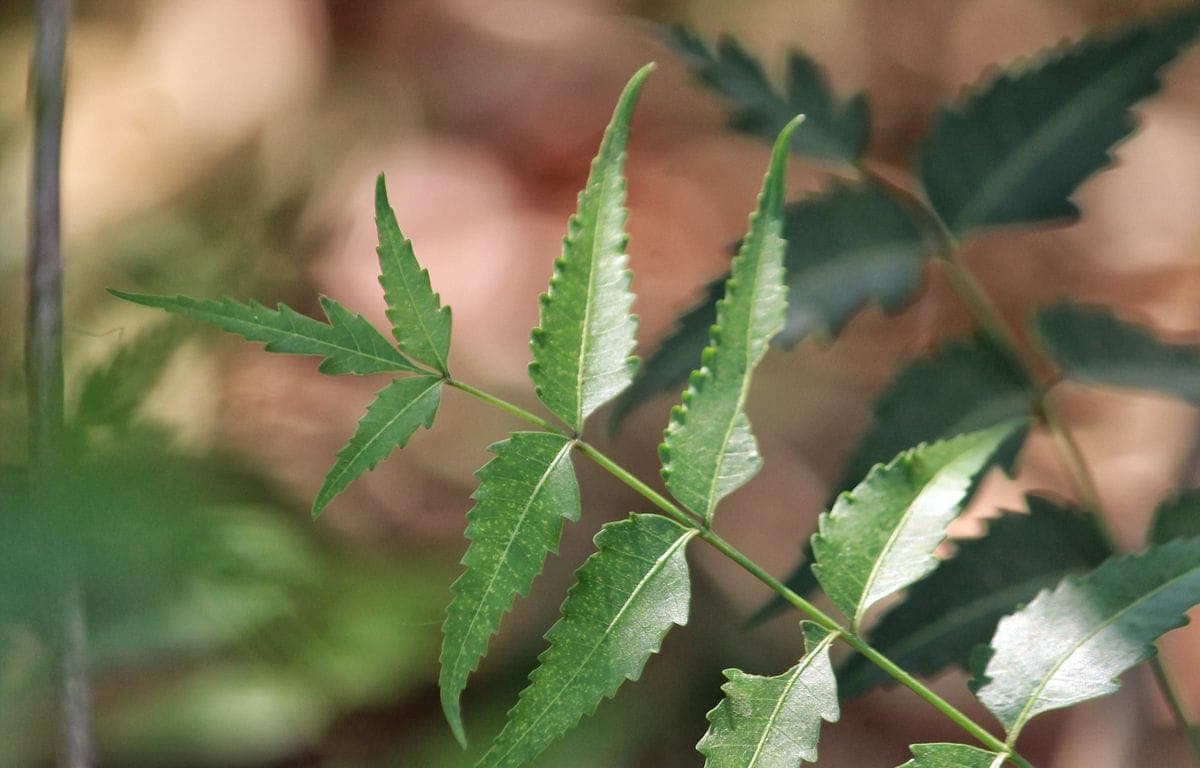
Start with the leaf. It settles most cases on its own and works on a knee-high seedling as well as a mature tree. Both species carry compound leaves, so the question is how many times a leaf divides before you reach a single leaflet.
| Feature | Neem (Azadirachta indica) | Persian lilac (Melia azedarach) |
|---|---|---|
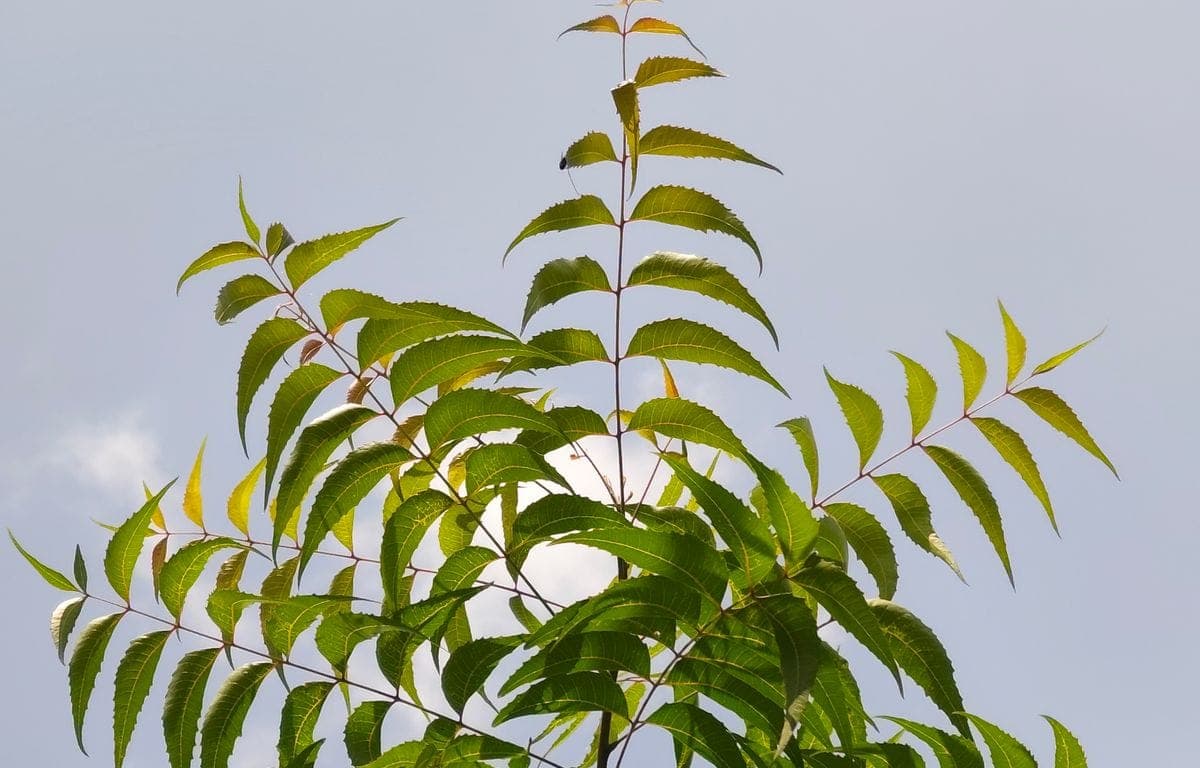
| Leaf structure | Pinnate: leaflets sit straight on one central stalk | Bipinnate to tripinnate: the stalk branches first, so the leaf looks lacy |
| Flowers | Small, white to cream, honey-scented sprays | Lilac to mauve, with a dark purple tube at the centre |
| Fruit | Olive-shaped, green to yellow, soft pulp, usually one seed | Round, pale yellow, wrinkling, hard grooved stone with several chambers |
| In winter | Holds most of its leaves; sheds briefly in spring | Bare branches hung with yellow berries for months |
| Common Indian names | Neem, nimb, vepa, Indian lilac | Bakain, dharek, drek, mahanimb, ghora neem, bead tree |
The leaf test
A neem leaf is pinnate: one central stalk with leaflets attached straight onto it, each curved like a small sickle, lopsided at the base and toothed along the edge. Held up to the light it looks like a feather.
A Persian lilac leaf is bipinnate and often tripinnate. The central stalk branches first, and those branches carry the leaflets, so the leaf reads as open and lacy, closer to a fern.
Flowers, fruit and the winter giveaway
Colour decides the flowers: neem white to cream, Persian lilac lilac to mauve with a dark purple staminal tube down the middle, which is why English named it after the garden lilac, a plant it is not related to. Neem, unhelpfully, is often called Indian lilac in the same language. The fruit seals it. Persian lilac berries dry and wrinkle on the branch over a hard grooved stone of several chambers, which is why the tree is also called the bead tree, and by January they hang on bare wood while a neem beside them is still in leaf.
One method to drop entirely is tasting. Chewing a leaf and calling it neem because it is bitter fails here: both trees are bitter, and one of them can poison you. For the version of this you meet at a nursery, our guide on telling neem from bakain and curry leaf covers the seedlings people actually buy.
Why the names make it worse
The vocabulary works against you. Persian lilac is bakain or bakayan in Hindi and Urdu, dharek or drek in Punjab, and in several regions mahanimb or ghora neem, literally great neem and horse neem. Every one of those puts neem in the listener's head. Then there is Melia dubia, a fast-growing timber tree sold in parts of south India as Malabar neem. Useful tree, also not neem. When three species circulate under neem-shaped names, a seed lot described only as neem is doing very little work.
How dangerous is Persian lilac?
The fruit is the serious risk. Poisoning after children ate the berries appears in medical case reports, and the tree is a recognised hazard in veterinary practice, with pigs, sheep, poultry and dogs all affected. Reported effects run from vomiting and diarrhoea to neurological signs in severe cases. If a child swallows the berries, do not wait for symptoms: go to a doctor or the nearest emergency department, and carry a leaf and fruit sample with you.
Neem is not food either. Neem oil is dangerous if swallowed, particularly by infants, so keep any concentrate on a high shelf. On skin, the more ordinary risk with any plant extract is an allergic reaction. The American Academy of Dermatology explains how allergic contact dermatitis develops, including why it can appear after months of trouble-free use. Patch test a new neem product on the inner forearm and give it 48 hours.
Why species verification is worth paying for
The commercial consequence is blunt. Once a seed is pressed or a leaf is powdered, every field mark above is gone. Colour, thickness and even the sulphurous bitter smell are not species proof, and no shopper can identify an oil by eye. Laboratory methods exist, chemical fingerprinting and DNA-based identification among them, but they belong in a supplier's quality checks, not at a market stall.
A labelled cosmetic buys traceability rather than magic. Cosmetics sold in India fall under the Central Drugs Standard Control Organisation, and the rules require a pack to carry the manufacturer's details, a batch number and a manufacturing date. That is the paper trail that lets anyone ask which seed lot an oil came from, and an unmarked sack cannot answer at any price.
It also explains a price gap that otherwise looks unreasonable. A 30ml cold-pressed virgin neem concentrate at ₹1,299 costs many times the same volume decanted from a drum, and the difference should buy identified seed, a stated pressing method and a batch someone is accountable for; at minimum, a labelled pack gives you a batch number to ask about. If handling a concentrate does not appeal, a finished, ready-to-use neem bhringraj hair oil moves that question onto the maker's desk. What no label settles is how much azadirachtin survived processing, which is one of the limits covered in our guide to reading a neem label. Verified sourcing tells you which tree is in the bottle. It does not promise the bottle will fix anything, and a rash that spreads or refuses to settle still belongs with a dermatologist.
Frequently asked questions
Is bakain the same thing as Persian lilac?
Yes. Bakain, bakayan, dharek, drek, mahanimb, ghora neem, chinaberry and bead tree are all common names for Melia azedarach. Neem is a separate species, Azadirachta indica, in the same family.
Could Persian lilac seed be pressed and sold as neem oil?
Nothing physically prevents it, and overlapping names make honest mistakes easy in a loose supply chain. That is an argument for buying oil that names its source and carries a batch number, not for assuming every market sack is mislabelled.
Can I identify the species from powder or oil at home?
No. Smell, colour and bitterness stop being reliable markers once the plant is processed. Identification has to happen at the tree, which is exactly why sourcing records matter.