Neem & Nature
Azadirachta indica: the neem tree's botanical name, family and regional names
13 Oct 2026 • Neemyukt Research Team
Neem has one botanical name and a dozen everyday ones, and the everyday ones cause the trouble. A Sanskrit verse calls it nimba, a nursery tag in Bengaluru says bevu, an English gardening book says Indian lilac, and Indian lilac sits close enough to Persian lilac that people assume one tree. They are two, and that overlap causes the most confusion.
The fixed point is the Latin. Neem is Azadirachta indica A. Juss., family Meliaceae, and that name means the same in Chennai, Kolkata and Cologne. It is also why a species named on a pack beats the word herbal: a neem and tea tree glycerin soap bar at ₹499 for 100g at least tells you which plants are claimed, while a herbal cleansing bar names nothing you can look up.
In short: Neem's accepted botanical name is Azadirachta indica A. Juss., in Meliaceae, the mahogany family. Linnaeus first placed it in Melia as Melia azadirachta, a synonym still found in older writing. Nimba, vepa, vembu, bevu, limdo, kadunimb, margosa and Indian lilac all mean this tree; Persian lilac, bakain and chinaberry mean another, Melia azedarach.
What the name Azadirachta indica records
Each part carries information. Azadirachta latinises the Persian azad dirakht, the free or noble tree, from the longer azad dirakht-i-Hind, the noble tree of India. The epithet indica repeats that geography. The trailing A. Juss. is the author citation, crediting Adrien de Jussieu, who established the genus in an 1830 monograph on the Meliaceae.
Then comes the twist behind much of the muddle. Melia azedarach, the tree neem is most often confused with, draws its epithet from the same Persian words. Two genera, two trees, and even the Latin echoes. Sounding alike was never evidence of being alike.
Why was neem moved out of the genus Melia?
Linnaeus described both trees in 1753 and filed them together: Melia azadirachta for neem, Melia azedarach for the Persian lilac. He worked largely from dried material, and pressed flat the two do look like neighbours.
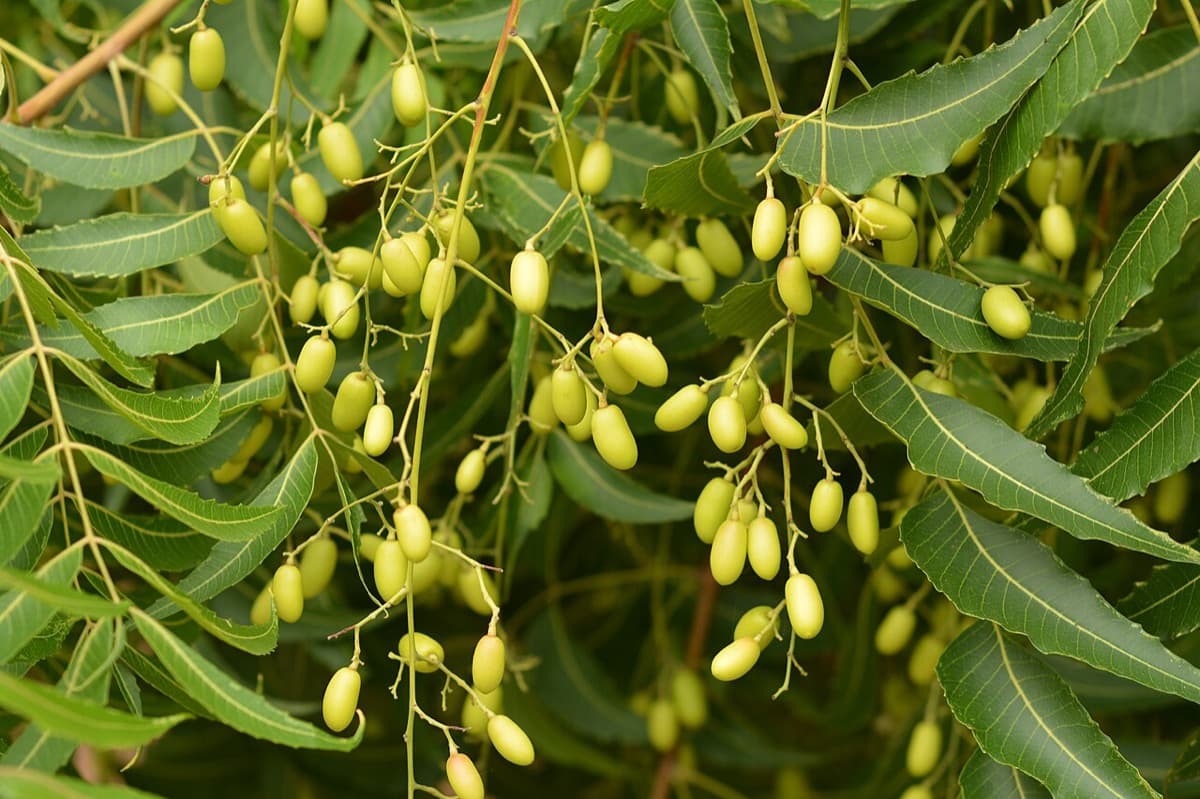
Jussieu separated them in 1830 on structure rather than resemblance. The flowers differ in the staminal tube and its appendages. The fruit differs more plainly: neem's drupe usually carries a single seed, while the Melia stone is hard, grooved and divided into several chambers. Molecular work has since supported the split, leaving two genera in one tribe of Meliaceae.
The discarded names survive in print. Melia azadirachta L., Melia indica (A. Juss.) Brandis, common in colonial Indian forestry literature, and Antelaea azadirachta (L.) Adelb. are all synonyms of Azadirachta indica. A monograph using one of them is out of date, not describing a different plant.
Which family is neem in?
Meliaceae, the mahogany family. Its better-known members are timber trees: true mahogany (Swietenia), African mahogany (Khaya) and Indian toon (Toona ciliata). The genus Azadirachta is small, the other familiar species being Azadirachta excelsa of Southeast Asia. Meliaceae is known chemically for limonoids, the bitter compounds behind neem's taste.
What neem is called across India
Indian names run back to two roots: the Sanskrit nimba, which gives nim, neem, nimb and limb, and a southern group around vepa, vembu and bevu. Classical Sanskrit also records arishta, so an Ayurvedic passage can look like it covers two plants. How Unani and Siddha name the tree is a separate story, told in neem in Unani and Siddha.
| Language or usage | Name for neem | Note |
|---|---|---|
| Sanskrit | nimba | also arishta in classical texts |
| Hindi, Urdu | neem, nim | the form that entered English |
| Bengali | nim | |
| Marathi | kadunimb, limb | kadu means bitter |
| Gujarati | limdo, limbdo | also kadvo limdo, the bitter limdo |
| Kannada | bevu | |
| Telugu | vepa | |
| Tamil | vembu, veppa maram | neem oil is veppennai |
| Malayalam | aryaveppu | |
| Older English and French trade writing | margosa, margousier, Indian lilac | from Portuguese amargosa, bitter |
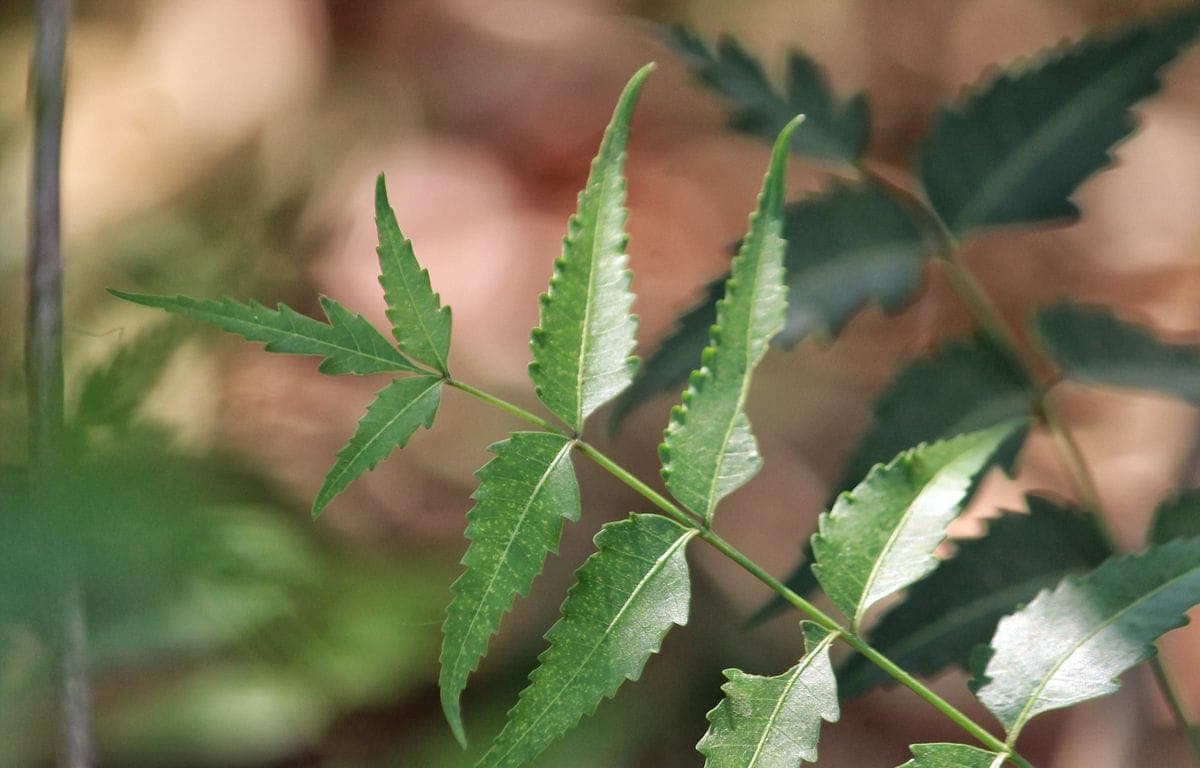
One row needs care. In Gujarati and Marathi the limdo and limb names are shared with the curry leaf tree and separated only by an adjective: kadvo limdo is neem, mitho limdo is curry leaf. With a seedling rather than a document in front of you, telling neem from bakain and curry leaf is the guide to read.
Indian lilac, Persian lilac and the names that mean another tree
This is where naming stops being trivia. Indian lilac and margosa mean neem. Persian lilac, bakain, bakayan, dharek, chinaberry, bead tree and white cedar all mean Melia azedarach, whose fruit has a record of poisoning children and livestock. Several of its regional names, mahanimb and ghora neem, contain the word neem. Neither tree is a true lilac, incidentally: those are Syringa, in another family entirely. For the marks that separate the two species in front of you, see neem vs Persian lilac.
Does the botanical name on a label matter?
It settles identity, and nothing else. Cosmetic ingredient lists follow an international convention of naming plants by their Latin binomial, so a pack printing Azadirachta indica, or the older Melia azadirachta that some ingredient lists still use, names a species you can look up and hold a supplier to. Herbal, ayurvedic and plant-based name no species at all. That is the whole commercial argument, and it is a modest one: identity is not potency.
It matters most once processing has removed every other clue, since nobody identifies a pressed oil or a milled powder by eye. That describes a cold-pressed virgin neem concentrate at ₹1,299 for 30ml, which is not on sale yet: while it is pre-launch, its page records waiting-list details instead of taking an order. For ordinary washing, a neem and cucumber soap bar at ₹499 asks less.
A correct species name predicts nothing about your own skin. Plant extracts irritate some people, so patch test anything new on the inner forearm and leave it two days. The US National Library of Medicine notes in its overview of rashes that causes are many and some need medical care. A rash that spreads, blisters or will not settle deserves a doctor rather than another product.
Frequently asked questions
Is Melia azadirachta the same tree as Azadirachta indica?
Yes. Melia azadirachta L. is Linnaeus's original name for neem and remains a synonym of the accepted name, Azadirachta indica A. Juss. The plant did not change; its genus did.
Why do old books call neem oil margosa oil?
Margosa comes from the Portuguese amargosa, meaning bitter, and reached English and French through trade with India. It refers to neem, though the French margousier has also been applied to Persian lilac.
Is Indian lilac neem or bakain?
Indian lilac is neem. Bakain is Persian lilac, Melia azedarach, a different species in the same family, and its fruit should not be eaten.