Hair Care Guides
Premature greying: why hair loses colour early and what genuinely helps
25 Sept 2026 • Neemyukt Research Team
Finding a white strand in your twenties lands differently from ordinary hair trouble. Hair fall feels like something you might fix. Greying feels like a verdict. It also arrives quietly, one strand at a time, so most people only notice once there are enough to see in a photograph.
In short: Hair turns grey when the pigment cells inside the follicle stop producing melanin. That happens largely because the stem cell reserve replenishing them runs down while oxidative damage accumulates. Genetics sets the timetable for most people, though B12 or iron deficiency, thyroid disease and smoking can pull it earlier. Only greying caused by a correctable deficiency or illness has a realistic chance of reversing.
What actually happens inside the follicle?
Hair colour is manufactured, not stored. Each growing follicle holds melanocytes that make melanin and pass it to the cells building the shaft, so the strand is coloured as it forms. Once a hair has grown out, its colour is fixed, which is why no single strand turns white overnight.
Those melanocytes have a limited lifespan and are replaced from a stem cell reserve inside the follicle. Every growth cycle draws on it. When that reserve is exhausted for a given follicle, the next hair grows out uncoloured, and because follicles run out at different times, greying spreads unevenly. The US National Library of Medicine's MedlinePlus hair problems overview describes this decline in pigment cells with age.
Oxidative stress accelerates it. Making melanin generates hydrogen peroxide, and the follicle relies on enzymes such as catalase to clear it. That capacity falls with age, letting peroxide build up where it damages melanocytes and blocks pigment production. The follicle bleaches itself from within while losing the cells that would restore colour.
Why do some people grey so much earlier?
Genetics, by a wide margin
If your parents greyed in their twenties, your odds are high whatever your diet. Genes shape how large the stem cell reserve is, how fast it depletes, and how well the follicle handles oxidative load. Ask older relatives when their first greys appeared; that one answer explains most cases.
Nutritional gaps worth checking in India
Vitamin B12 occurs reliably only in animal foods and fortified products, so deficiency is common on long-term vegetarian diets, and it is a recognised contributor to premature greying. MedlinePlus keeps a plain-language overview of the B vitamins worth reading before you supplement. Low iron stores are widespread too, particularly among women. Copper matters because tyrosinase, the enzyme central to melanin production, depends on it, though dietary copper deficiency is uncommon.
These are blood tests, not guesses. If greying began before your mid-twenties, ask a physician for B12, ferritin and thyroid function. Supplementing blind, especially with iron, is a bad idea.
Conditions and habits
Thyroid disease in either direction is associated with early greying and diffuse thinning, which is why the two often arrive together. Vitiligo and alopecia areata involve immune activity against pigment cells or follicles, and white hairs inside a patch are a recognised feature. Smoking is consistently linked with earlier greying. Harsh chemical processing does not cause greying, but repeated bleaching leaves the cuticle porous, and porous white hair goes brassy fast.
What genuinely reverses greying?
Very little, and only in specific cases. Where a correctable deficiency or untreated thyroid disorder is the driver, treating it can restore pigment in some new growth, slowly and without guarantee. Genetic, age-related greying does not reverse with anything currently available.
| Approach | Realistic effect | Evidence position |
|---|---|---|
| Treating diagnosed B12, iron or thyroid problems | May restore pigment in new growth | Supported in deficiency-linked cases; needs testing first |
| Amla, bhringraj and traditional hair herbs | Condition the strand, support scalp comfort | Lab studies on antioxidant activity only; no human evidence of pigment restoration |
| "Melanin booster" supplements | Help only if you had a deficiency | No good evidence at normal nutrient levels |
| Henna and indigo | Deposit colour; no effect on the follicle | Cosmetic only; patch test pre-mixed powders |
| Quitting smoking | May slow further progression | Association consistent across studies |
Anything promising to darken hair that has already turned grey is describing a dye. Preparations built around amla and bhringraj genuinely help with conditioning and scalp comfort, which is a separate claim worth keeping separate on a label.
How should you care for hair that has already greyed?
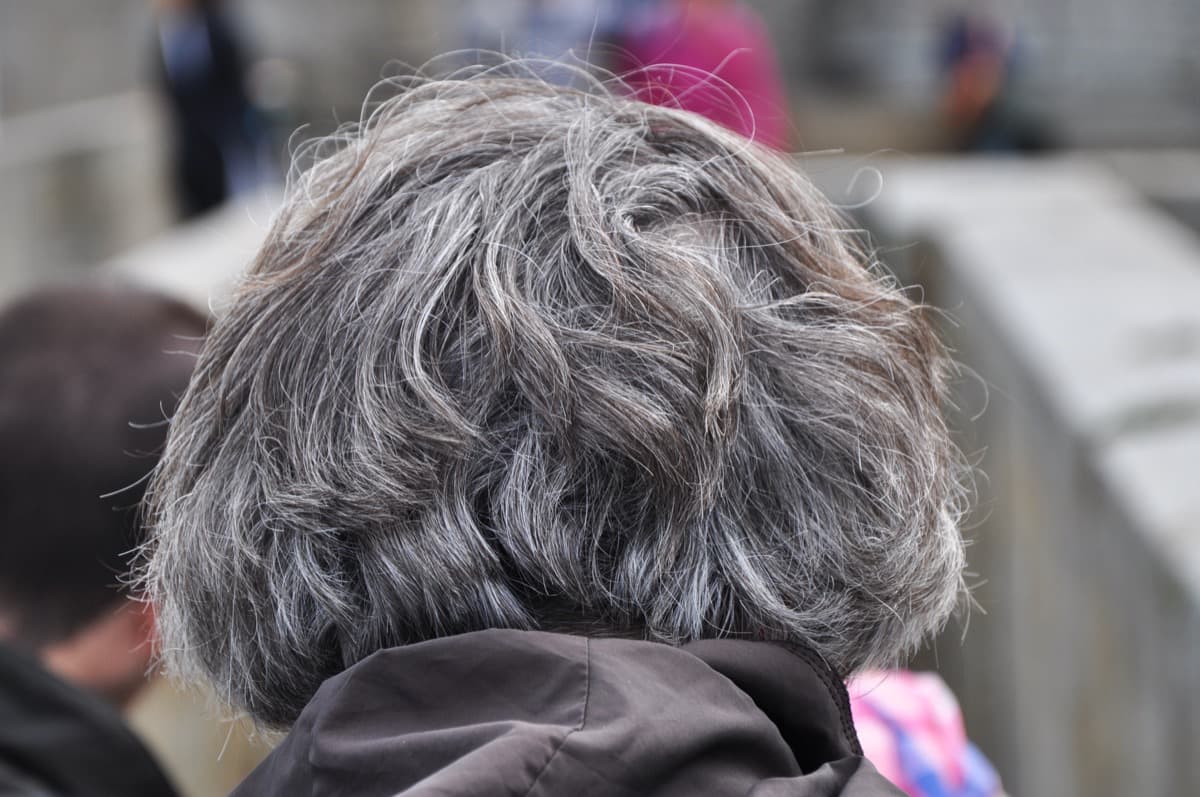
Grey hair is structurally different. Without melanin the strand is usually coarser, and sebum production has often declined too, so it runs drier and more porous. Porosity is the real issue: it absorbs hard-water minerals, chlorine, pollution and sun, which is what turns white hair yellow.
Four habits do most of the work:
- Cleanse gently and resist over-washing, since stripping already-dry hair worsens texture and frizz. Our guide to washing frequency and hard water helps you judge what your supply is doing to it.
- Condition every single wash, without exception.
- Cover your head on long sun exposures, because UV is what drives the yellowing.
- Oil before washing rather than leaving it on for days.
Oiling stays useful, done with restraint rather than drowning the scalp. A pre-wash massage with a light herbal blend helps with dryness and roughness, and technique matters more than quantity, as our oiling guide explains. A slip-heavy conditioner such as our Neem Aloe Hibiscus Conditioner makes coarse grey hair easier to detangle. Neither changes pigment, and no honest product will.
If greying arrives with noticeable thinning, persistent flaking or distinct bald patches, see a dermatologist rather than buying more products.
Frequently asked questions
Does plucking a grey hair make more grow back?
No. Each follicle produces one hair and plucking it does not affect neighbours. Repeated plucking can damage that follicle, and the regrowth will be grey anyway.
Can stress really turn hair grey?
Severe stress can accelerate a process already underway and trigger shedding that makes existing greys more visible. It does not convert a strand that has already grown. Overnight stories are almost always sudden shedding of dark hair.
Is grey hair a sign of vitamin deficiency?
Sometimes, usually not. Deficiency becomes plausible when greying starts very early, there is no family history, or it comes with fatigue, tingling in the hands and feet, or unusual shedding.
Do natural dyes damage hair?
Pure henna and indigo are gentler than permanent dyes. The risk sits with pre-mixed "natural" powders containing added dyes such as PPD, which can cause serious allergic reactions. Patch test everything.
The realistic takeaway
Greying is a timetable you largely inherit, nudged by health and habits you partly control. Rule out correctable causes with a doctor if it began early, then put your effort into hair whose texture has genuinely changed. If thinning is also in the picture, read our guide to hair fall causes in India next.