Skin Care Guides
Layering a facial oil with a serum: which goes first
14 Oct 2026 • Neemyukt Research Team
Two bottles, one face, and nothing on either label about which one goes on first. A serum and a facial oil do genuinely different jobs, and getting the sequence wrong usually means you get less out of whichever of the two you spent more money on.
The deciding factor is not price or potency. It is water content. Thin, water-based layers go on before thick, oil-rich ones, and a facial oil is almost always the most oil-rich thing in a routine. The full layering order, from cleanser to sunscreen, runs on the same logic.
In short: Apply the serum first, give it about half a minute to settle, then press the facial oil on top. Oil leaves a soft film on the surface that slows water loss, and that same film is a poor route for a water-based serum to travel through. The exception is a serum that is itself oil-based, in which case the order barely matters and you should start with the lighter texture.
Why the serum goes on first
Most serums are mostly water. Into that water go humectants such as glycerin or hyaluronic acid, plus the active the serum is sold for: a vitamin C derivative, niacinamide, peptides. Those ingredients need direct contact with slightly damp skin to spread evenly and sink in.
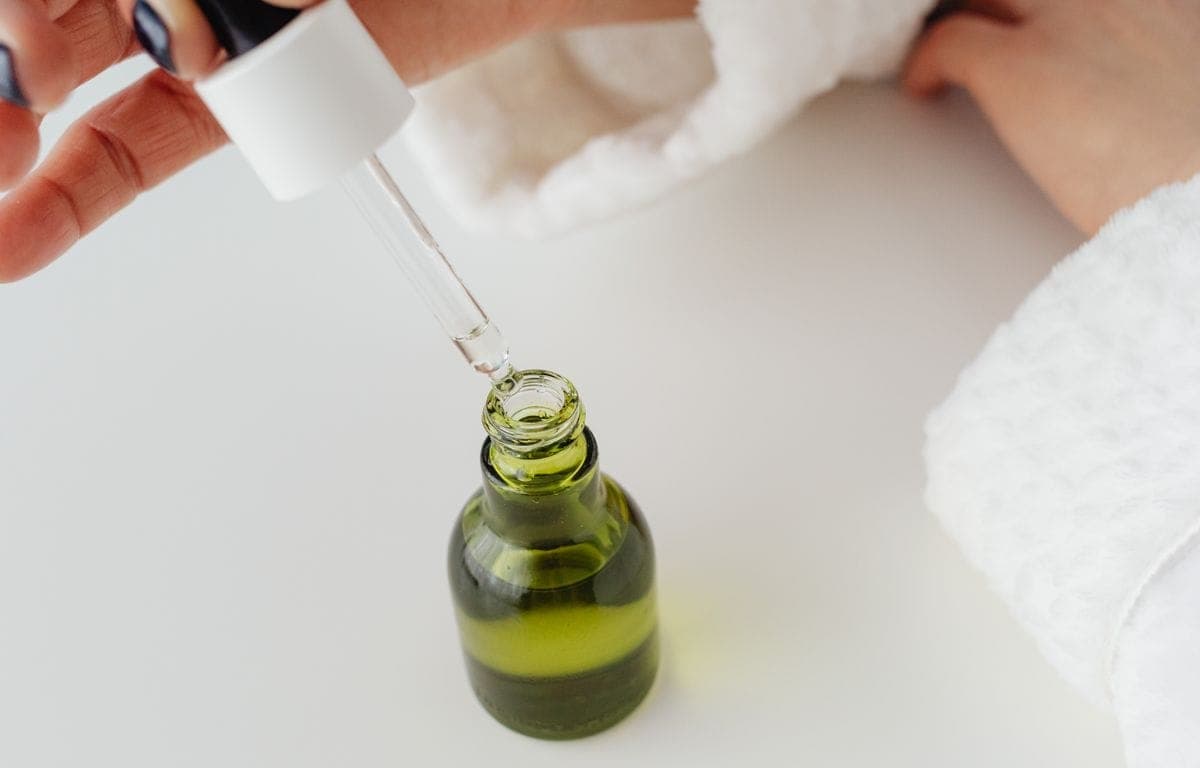
A facial oil contains no water at all. It works by sitting on the surface as an emollient film, smoothing the outer layer and slowing how fast water evaporates from it. The American Academy of Dermatology advises applying moisturiser while skin is still damp, because the point of that layer is to hold water that is already there. Applied underneath, it has nothing to hold, and the serum then has to cross a lipid film you just built.
Does the kind of serum change the answer?
Water-based serums
Vitamin C, niacinamide, hyaluronic acid and most hydrating or brightening serums are water-based, so the serum goes first every time. A vitamin C serum in particular does better going straight onto freshly cleansed skin, with nothing between it and the surface.
Oil-based and oil-suspended serums
Some serums carry no water. Bakuchiol is often suspended in a carrier oil, so a bakuchiol serum can behave more like a facial oil than like a vitamin C serum. Check how your own neem bakuchiol night renewal serum actually feels going on before you decide where it sits in the order. When both products are oil-based, put the thinner one on first, then the richer one. It is also worth asking whether you need both; two oil layers on one face is often one too many.
| What you are layering | First | Second | Why |
|---|---|---|---|
| Water-based serum and facial oil | Serum | Oil | The active needs skin contact; the oil then limits water loss |
| Hyaluronic acid serum and facial oil | Serum, on slightly damp skin | Oil | A humectant needs water around it to hold on to |
| Oil-based serum and facial oil | Whichever feels lighter | The richer one | Both are lipids, so absorption order matters little |
| Facial oil and gel moisturiser | Gel | Oil | The gel is the water-based layer |
Where moisturiser and sunscreen fit around the oil
A facial oil is not a moisturiser substitute, and it does not have to be the last step. On dry skin in cold, dry weather, serum, then a few drops of oil, then a cream works well, because the cream adds water and humectants that the oil alone cannot. On oily or combination skin, a water-based gel over the serum is often enough, and the oil becomes an occasional night-time step. A neem, sea buckthorn and saffron facial oil is supportive in that role, not a replacement for hydration.
Sunscreen is the one layer with a fixed position: over your hydrating steps, under nothing but makeup. A slick oil film directly beneath sunscreen can disturb how evenly it sits, so in the morning most people are better off with serum, moisturiser and sunscreen, keeping the oil for the evening.
How long to wait between the two
Thirty to sixty seconds is usually enough, or simply until the serum no longer feels wet to the back of a finger. You are waiting for the surface to stop feeling tacky. Tackiness is what makes the next layer pill into little flakes, and that usually means there was too much product in the layer underneath.
When the order is right and the result still is not
Correct sequencing does not fix quantity. Most greasiness comes from using five or six drops where two would do, and a small bottle goes further than people expect, as a 30ml facial oil lasting months shows. If you wake up shiny, reduce the drops before you change the order, and read up on keeping a facial oil from looking greasy by morning.
There are also limits to what layering can achieve. If congestion, inflamed acne or persistent redness continues for weeks regardless of how carefully you sequence things, that is a signal to see a dermatologist rather than reorder bottles. Prescription options such as adapalene, benzoyl peroxide or oral treatment address causes that no serum-and-oil arrangement will reach.
Serum first, oil second, moisturiser according to how dry your skin actually feels, and sunscreen over everything in the morning. Keep that sequence steady for a few weeks before judging either product.
Frequently asked questions
Can I mix the serum and the oil in my palm instead of layering?
For a plain hydrating serum, mixing is a fine shortcut on a rushed night. For an active serum it is not, because the oil dilutes it and changes how evenly it spreads. Layer anything you bought for a specific active.
How many drops of oil over a serum?
Two or three for the whole face. Warm them between your fingertips first, then press them in rather than rubbing, which helps the oil sit as a thin even film instead of a patchy one.
My skin is oily. Should I skip the facial oil and keep only the serum?
In humid months, often yes. A serum followed by a light gel is frequently enough, and you can bring the oil back when the air turns dry and your skin starts feeling tight by evening.