Neem & Nature
Does neem go bad? Shelf life of neem oil, leaves and powder at home
21 Sept 2026 • Neemyukt Research Team
Neem has a reputation for being indestructible: bitter, strong smelling, and used in Indian homes for generations without a printed expiry date in sight. That reputation is where most storage mistakes begin. Neem oil is a fat and dried neem is plant material, so both age, and both age faster in a warm, humid house than in a laboratory cupboard.
In short: Yes, neem goes bad, though slowly and rarely dangerously. Cold-pressed neem oil turns rancid over roughly one to two years as it oxidises, while dried leaves and neem powder lose potency over months and spoil quickly once they pick up moisture. Your nose is a better test than the date on the label.
What does "going bad" actually mean for neem?
Two separate things happen. The first is loss of potency: the compounds people associate with neem, including azadirachtin and the sulphurous molecules behind its smell, degrade with heat, light and oxygen. The material still looks fine. It simply does less.
The second is real spoilage. Oils oxidise and go rancid, powders absorb water and grow mould, and water-based products support microbial growth once their preservative system is exhausted or contaminated by wet fingers.
Neem oil rarely becomes hazardous. It becomes unpleasant, weaker and more likely to irritate, which is one reason a product that suited you last summer can sting this one. If a reaction lingers after you stop using something, the American Academy of Dermatology's guidance on contact dermatitis is a better next step than another home remedy.
The four forces that age neem
Air and light
Oxygen is the main enemy of any unrefined seed oil. Every time you open a bottle, a little air stays behind, so a half-empty bottle ages faster than a full one. Sunlight speeds up the same reaction, which is why good neem oil ships in amber or dark glass rather than clear plastic.
Heat and humidity
As a rule of thumb in oil chemistry, reactions such as oxidation speed up sharply with every few degrees of warming. A bottle on a sunny windowsill in May is living a much faster life than one in a dark almirah. Humidity matters more for dry forms: neem powder pulls water out of the air, and monsoon air supplies plenty.
What does a rancid smell actually tell you?
Fresh cold-pressed neem oil smells aggressive: garlicky, sulphurous, a little like mustard and peanut shells. People dislike it, but that is the correct smell, and the chemistry behind it is worth knowing if you want to judge a bottle by nose. We covered it in why neem smells so strong.
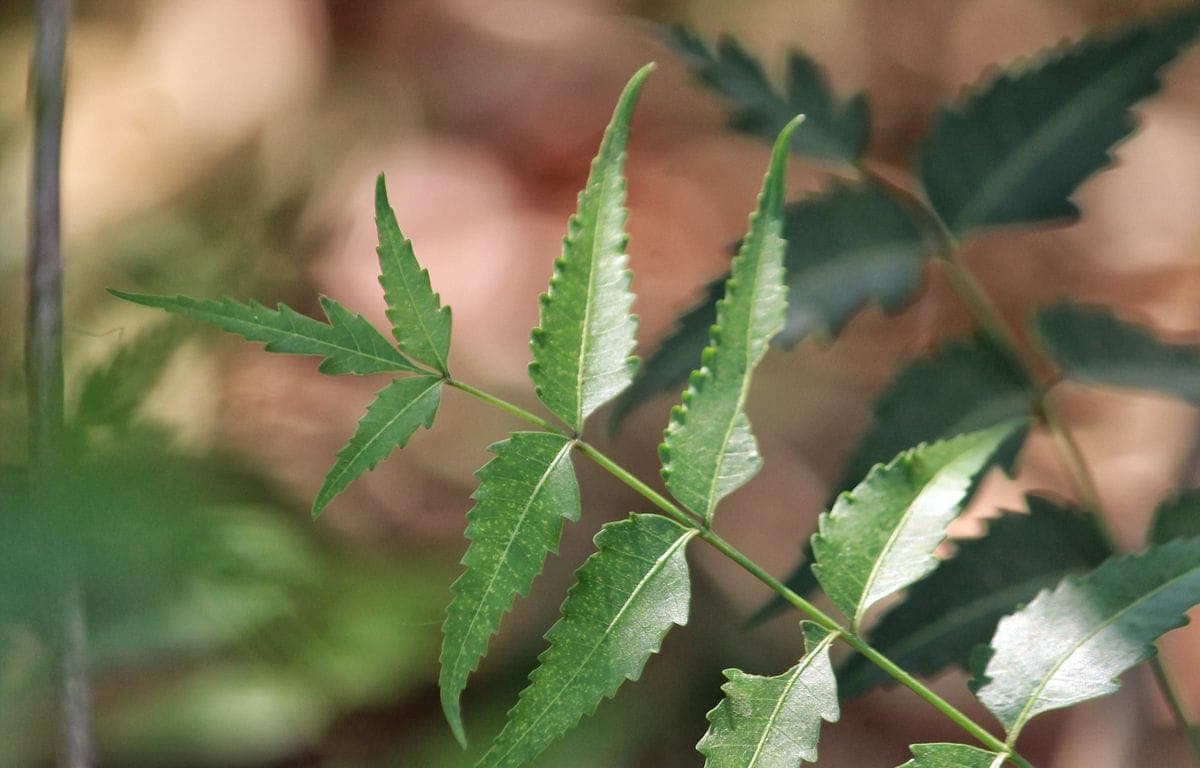
Rancid neem smells different in character, not just strength. Expect a flat, waxy, crayon-like note layered over the garlic, sometimes turning sour. The giveaway is that the bitterness fades while a greasy staleness rises. Stale dried leaves smell like dusty hay instead of sharp green bitterness. Any grey bloom on leaves or dark specks in powder means discard, not sieve.
How long does each form realistically keep?
These are practical ranges for an unairconditioned Indian home, drawn from how these materials behave in ordinary storage rather than from stability trials. Storage moves them in both directions, and a sealed bottle in a cool almirah will outlast every figure below.
| Form | Typical keeping time once opened | First sign it has turned |
|---|---|---|
| Cold-pressed neem oil | About 1 to 2 years, less in a hot room | Waxy smell; cloudiness that stays after warming |
| Refined or deodorised neem oil | Often longer, with less of the original character | Flat, stale odour; separation |
| Dried neem leaves | Roughly 6 to 12 months for useful potency | Colour fading to grey-brown; hay-like smell |
| Neem powder | Roughly 6 months once opened | Clumping; musty note; loss of bitterness |
| Neem soap bar | Two to three years sealed; months once wet | Orange or brown spots on the surface |
Cold-pressed and refined oil age differently
Cold pressing keeps the fragile fraction of the seed intact, including the compounds that make neem interesting. Those are also the first to degrade. Refining strips colour, smell and much of that fraction, giving a more stable but far more ordinary oil. The trade-off is explained in how neem oil is actually made.
That is why a small bottle, such as a 30ml virgin neem concentrate, is usually a smarter buy than a litre you will stretch over three years. Buy what you will finish in a season, and read a strong smell as freshness rather than a fault.
Do finished products last longer than raw neem?
Usually, yes. A formulated wash, cream or soap is built to survive a shelf: it carries antioxidants and a preservative system, which a jar of homemade paste does not. Two conditions apply: it must stay sealed and dry between uses, and once you break the seal, the printed date stops being the whole story. Cosmetics sold in India are labelled under CDSCO rules with a manufacturing date and a use-before date, not the open-jar "6M" symbol used in Europe, so treat the use-before date as an unopened limit and judge an opened jar by smell and texture. A neem and tulsi glycerin soap bar stores well but will sweat if it sits in a puddle, so let it drain.
Homemade preparations are the opposite case. Fresh neem paste or leaf water has no preservation at all, so make it for the day and discard the rest. To judge how much real neem sits inside a bottle before you buy it, see our guide to reading neem product labels.
Storing neem in an Indian home
- Oil: dark glass, tightly capped, in a cupboard away from the stove and out of direct sun. A bedroom almirah beats a kitchen shelf.
- Powder and dried leaves: airtight jars rather than the original paper pouch, and never a wet spoon. Through the monsoon, a food-safe silica sachet in the jar earns its place. Leaves you dry at home must be bone dry before they are jarred, or they mould from the inside.
- Anything used in the bath: keep it out of the shower stream and capped. The bathroom shelf is the worst spot in the house: warm, wet and repeatedly steamed.
Winter solidifying is normal for neem. Warm the closed bottle in a bowl of warm water, never on a flame, and read oil that clouds below roughly 20 degrees Celsius but clears again as behaving exactly as it should. Cloudiness that survives warming, or a layer that will not remix, is a different story. When something does have to go, dilute rancid oil onto garden soil rather than pouring it down the drain.
One honest limit: well-stored neem is a supportive part of a hygiene routine, not a treatment. Persistent itching, scaling or a rash that keeps returning deserves a dermatologist, because problems like that often need antifungal or prescription treatment rather than a better-stored bottle.
Frequently asked questions
Can I use neem oil after its expiry date?
If it smells and looks normal it is probably usable, though likely weaker. If it smells waxy, flat or sour, discard it, and never use rancid oil on broken or inflamed skin.
Does refrigerating neem oil help?
It slows oxidation, which helps if you buy in bulk. The cost is condensation each time the bottle comes out, so decant a small working bottle and leave the rest cold and sealed.
Does neem hair oil keep as long as plain neem oil?
It depends on the carrier. Blends on stable bases, like a neem bhringraj hair oil, usually hold up better than neat cold-pressed oil, but the rules do not change: capped, dark, cool.
Neem does not fail loudly, it fades. Buy sizes you will finish, keep them away from heat and steam, and let smell be the test, because the bottle that still smells sharply of neem is the one still doing its job.