Ingredient Science
Turmeric in modern skincare: past the haldi-and-besan stage
14 Oct 2026 • Neemyukt Research Team
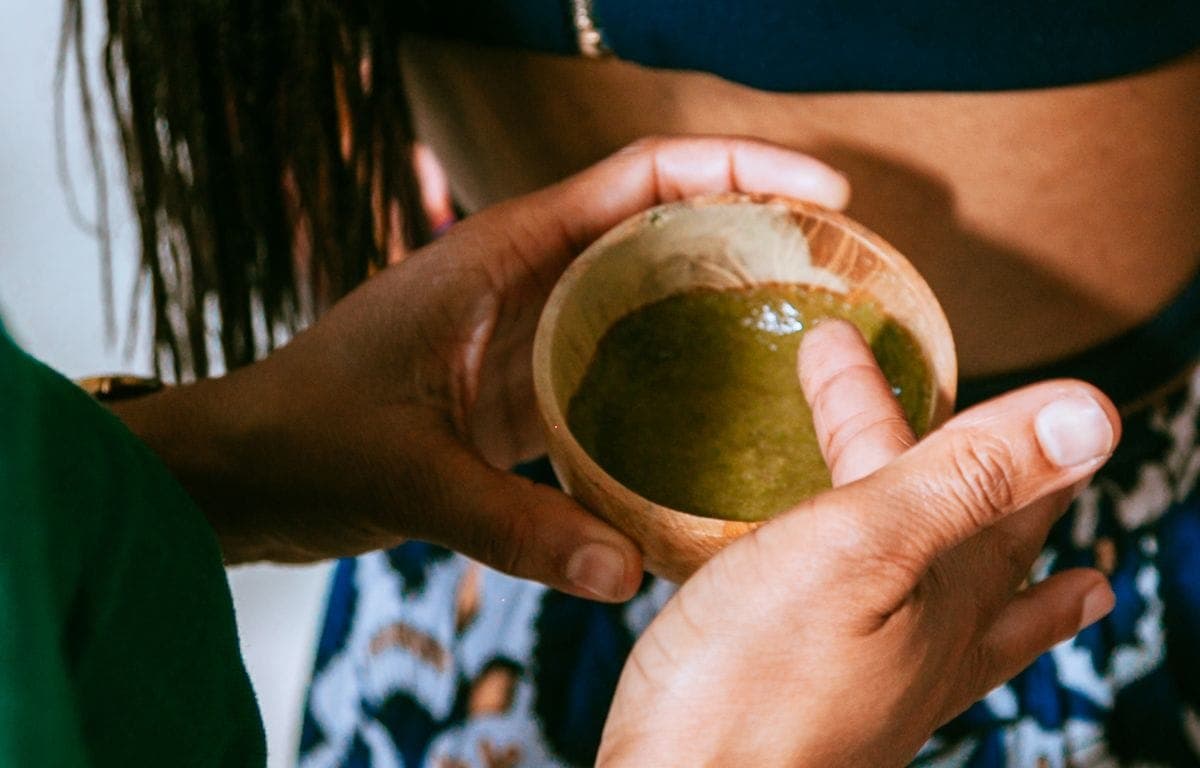
Haldi and besan is where Indian skincare begins for most of us. A spoon of turmeric, a spoon of gram flour, a splash of curd, twenty minutes on the face before a wedding. It works well enough that nobody questions it, and that is the quiet problem: the kitchen paste has become the ceiling of what people expect turmeric to do.
Cosmetic chemists have spent two decades trying to get past that ceiling. The interesting part is not that turmeric turned up in serums and toners. It is what had to change about the turmeric first.
In short: Raw haldi puts an unmeasured dose of a poorly absorbed, strongly pigmenting compound on the skin surface. Modern formulas use purified curcuminoid extracts, colourless curcumin derivatives or distilled turmeric oil instead, because those can be dosed, stabilised and kept from staining. The trade-off is that you can no longer judge strength by how yellow something looks.
What is a haldi-and-besan mask actually doing?
Most of the visible payoff comes from the besan and the curd, not the turmeric. Gram flour works as a mild physical scrub and soaks up surface oil. Curd contributes lactic acid at whatever concentration that particular curd happens to have, which is the honest reason results vary from kitchen to kitchen. The turmeric contributes a thin yellow tint that flatters most Indian skin tones, plus whatever small fraction of its compounds actually crosses into the upper skin layers during a twenty-minute sitting.
That is not nothing. The mechanism is simply not the one most people assume. If you want the evidence on turmeric itself rather than the ritual around it, that ground is covered in our piece on turmeric for skin, where ubtan meets the evidence, and the oil-absorbing half of the job is explained in what clay actually does to your skin.
Why formulators rarely bottle raw haldi
Three practical obstacles stand between turmeric powder and a shelf-stable product.
Curcumin absorbs badly
Curcuminoids are the most studied pigment group in turmeric, and they are famously hard to get into tissue. The US National Center for Complementary and Integrative Health notes that curcumin is poorly absorbed and rapidly cleared from the body, which is why so much turmeric research now focuses on delivery rather than dose. Skin adds another barrier on top of that, so a gritty water paste of unmilled powder mostly stays where you put it.
It stains, and the staining is not even
Curcumin binds readily to proteins in the outer skin layer and to fabric. On deeper skin tones the cast reads as a dull yellow-grey rather than a glow, and it concentrates in dry patches and around the nostrils.
It will not sit still
Curcumin shifts colour with pH, degrades in light and oxidises in water-based systems. A formula that looks golden in month one can turn brownish by month six, which tells you the active has already changed.
| Form | What it is | Main limitation |
|---|---|---|
| Raw haldi powder | Ground rhizome, used as a rinse-off paste | Unknown dose, gritty, stains |
| Standardised turmeric extract | Curcuminoids concentrated to a stated percentage | Still strongly coloured and light-sensitive |
| Tetrahydrocurcuminoids | Hydrogenated, near-colourless curcumin derivatives | Costly; less human skin data than the parent compound |
| Turmeric (ar-turmerone) oil | Steam-distilled volatile fraction | Scented, oil-soluble only, so it needs a lipid base |
Where turmeric fits in a routine now
Think of it as a supportive ingredient in a leave-on step rather than the headline act in a weekly mask. A toner or gel sits on skin for hours instead of minutes, which is a steadier way to use the ingredient than a weekly paste. A neem and turmeric toner is one way to slot it in after cleansing, and a neem ubtan face wash covers the daily rinse-off step without the scrubbing a kitchen paste usually involves. If you like the weekly ritual, a clarifying clay pack handles the oil-absorbing part without the yellow fallout.
On expectations: turmeric is best understood as a calming, tone-evening support ingredient, not a pigment eraser. Uneven tone has several causes, and the question behind most turmeric searches is unpacked in what reducing melanin really means.
When turmeric is the wrong tool
Three situations call for a doctor rather than another mask. Melasma, the symmetrical brown patching that often follows pregnancy or the pill, is a stubborn pigment disorder where dermatologists work with prescription options such as hydroquinone or tretinoin alongside strict sun protection. Persistent nodular or cystic acne needs assessment too, because topical adapalene or benzoyl peroxide and oral options sit outside what any botanical will reach. And if turmeric itself leaves your skin itchy, bumpy or red, stop using it: contact allergy to turmeric is documented, and patch testing with a dermatologist is the only way to confirm it.
Frequently asked questions
Does a clear turmeric product mean the turmeric is fake?
Not necessarily. Colourless derivatives and distilled turmeric oil are both genuine turmeric-derived materials. Depth of yellow tells you about the pigment present, not about activity.
Can I use turmeric daily?
A low-dose leave-on formula is generally fine daily if your skin stays comfortable. A raw haldi paste is better kept occasional, mostly because of the staining and the scrubbing that usually comes with it.
Why does my skin look yellow for two days after a haldi mask?
Curcumin has bound to the outer protein layer, which takes a few cycles of cleansing and natural shedding to clear. Dry skin and a longer sitting time both make it worse.
The honest summary is that turmeric did not get stronger when it moved into bottles. It got measurable. That is a smaller promise than the one a wedding ubtan makes, and a far easier one to keep.