Skin Care Guides
Saffron, turmeric or vitamin C: choosing one brightening active
16 Oct 2026 • Neemyukt Research Team
Three brightening ingredients dominate Indian shelves, and two of them were in our kitchens long before they reached a serum bottle. Kesar, haldi and vitamin C all promise an even, luminous tone, which makes choosing between them harder than it should be.
They are not interchangeable. They differ in how much human evidence sits behind them, how well they survive in a bottle, and how your skin tolerates them. Buying all three at once is how people end up reactive with little to show for it.
In short: Vitamin C is the sensible default, with the deepest research behind it for uneven tone and a useful antioxidant role during the day. Turmeric belongs in short-contact products such as washes and face packs more than in heavy leave-on use, since curcumin absorbs poorly and can tint skin. Saffron is the gentlest and costliest of the three, a fair pick for reactive skin or for a routine you will genuinely keep.
What brightening means here
None of them bleaches skin. They act on the pigment pathway: slowing the enzyme that assembles melanin, neutralising the free radicals that set it off, or calming the inflammation that makes pigment-prone skin darken after a spot heals.
Your baseline tone is genetic. What can change is the unevenness on top of it: sun-driven patchiness, post-acne marks and the grey dullness of dead cells. Read any claim on a carton as a description of mechanism, not a promise of a shade.
Saffron, turmeric and vitamin C side by side
| Vitamin C | Turmeric | Saffron | |
|---|---|---|---|
| Evidence | Strongest, including human trials | Good in the laboratory, thinner on skin | Mostly laboratory and small studies |
| Main action | Slows melanin synthesis, antioxidant | Antioxidant, calms inflammation | Antioxidant, mildly soothing |
| Best format | Morning serum | Wash, pack or light leave-on step | Light gel, oil or toner |
| Watch out for | Stinging, oxidising in the bottle | Yellow staining from raw root | Price and widespread adulteration |
| Tolerance | Moderate | Usually good | Generally high |
Why vitamin C is the usual starting point
Vitamin C does two jobs that matter for tone. It interferes with tyrosinase, the enzyme that converts tyrosine into melanin, which is how it is thought to slow new pigment while you keep using it. It is also a real antioxidant: MedlinePlus notes that vitamin C is an antioxidant the body needs to form collagen, which is why it suits a morning routine under sunscreen.
Stability is the weakness. Pure L-ascorbic acid is fussy about pH, oxidises on contact with air and light, and stings at higher strengths, while derivatives keep better and act more gently. Our guide on what concentration to start at covers that choice, and a supportive serum such as a neem and vitamin C brightening serum needs two to three months before you judge it.
Where turmeric genuinely fits
Curcumin, the pigment that makes haldi yellow, is well studied for antioxidant activity in laboratory work. On skin the problem is delivery: it is poorly soluble, penetrates reluctantly and leaves a visible tint as ground root. The ubtan tradition sidesteps all of that by keeping contact short and washing it off.
So match turmeric to format rather than expecting serum behaviour from it. A face pack, a wash or a light leave-on step such as a neem and turmeric brightening toner are the realistic routes. For how far the ingredient has moved on, see our piece on turmeric past the haldi-and-besan stage.
What saffron is, and is not, worth
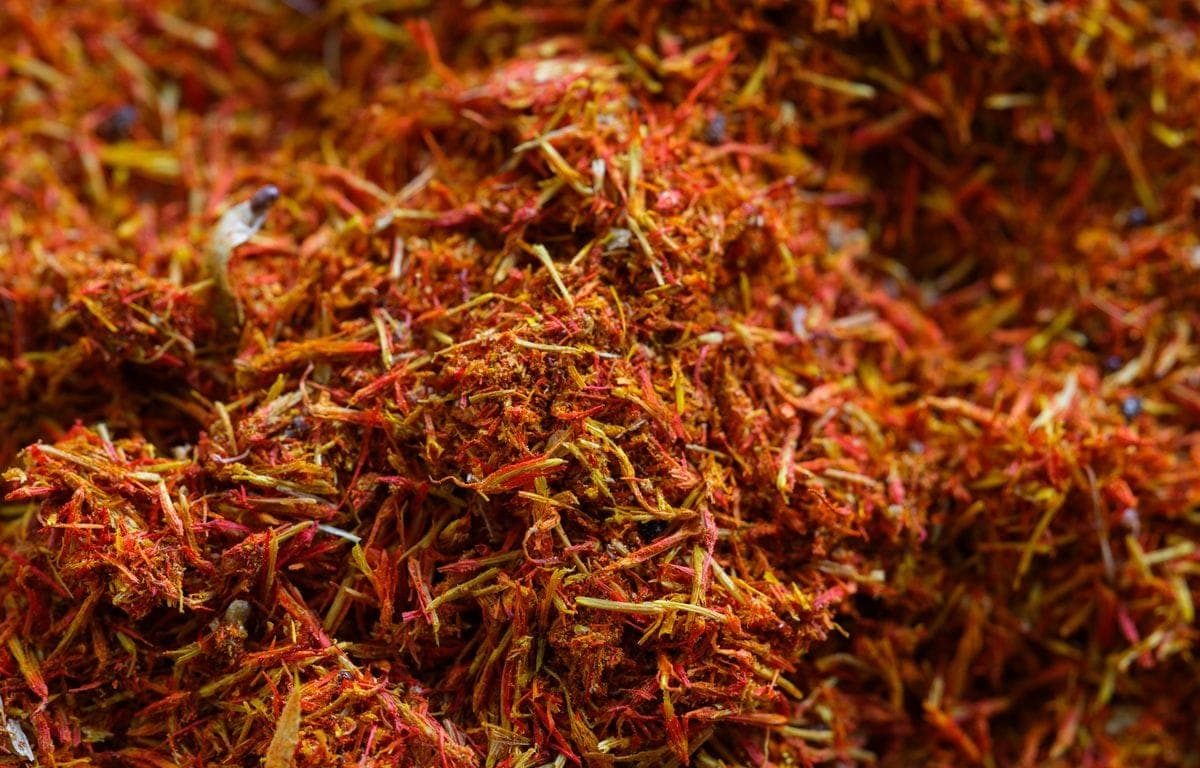
Saffron carries crocin, crocetin and safranal, compounds with measurable antioxidant activity in laboratory studies and some early work on pigment-related enzymes. Topical human data stays limited, and the quantity in a finished product is small, because the raw material costs more per gram than almost anything else on a shelf.
Tolerance is what saffron offers. Skin that cannot cope with an acid or a strong vitamin C usually wears a kesar step without complaint, and a neem and kesar glow gel is a mild way to include it. Adulteration is the genuine risk: dyed safflower is sold as saffron routinely, as we covered in is saffron in skincare worth it, or is it decoration.
How to pick one
If dullness or sun-driven unevenness is the complaint
Start with vitamin C in the morning. It is the only one of the three with a convincing case for slowing pigment production, and the antioxidant benefit is most useful in daylight hours.
If your skin reacts to everything
Begin with saffron or a short-contact turmeric product, both far less likely to sting. Irritation darkens pigment-prone skin, so the gentlest option you use daily beats the strongest one you abandon in a fortnight.
If you are choosing on value
Vitamin C tends to give the most visible change for what it costs. Saffron is the luxury of the three, and part of what you pay for is the ritual, which is legitimate as long as you know that is the trade.
The part that decides your result
Daily sunscreen matters more than the active you choose. All three reduce how much new pigment skin makes, while ultraviolet light keeps instructing it to make more. Pick one active, keep it for three months, photograph the area in the same light every few weeks, and change one thing at a time.
If a patch is spreading, sits symmetrically across both cheeks or the upper lip, appeared during pregnancy, or has not shifted after months of consistent use, see a dermatologist. Prescription options exist that work at a level no cosmetic ingredient reaches, and most need supervision to avoid worsening the pigment.
Frequently asked questions
Can I use all three at once?
You can, but it is a poor experiment. If your skin settles or flares, you will not know which ingredient did it. One active, three months, then reassess.
Is kitchen haldi fine on the face?
As an occasional wash-off pack, usually yes, mixed into curd or besan and rinsed within fifteen minutes. Leaving it on or using it daily risks a yellow cast and, in a few people, a contact allergy.
Does saffron milk or a vitamin C tablet change skin tone?
Correcting a real dietary deficiency helps skin, but neither drink nor supplement delivers a useful concentration to one dark patch. Topical products exist because that is where the pigment sits.