Body & Bath
Vetiver (Khus): India's Original Cooling Note
31 May 2026 • Neemyukt Research Team
Long before air conditioning, north India cooled its homes with a grass. Screens woven from khus roots hung over doors and windows through May and June, kept damp through the afternoon, and every breeze that passed through them arrived cooler and smelling faintly of rain on dry earth. If petrichor could be bottled, this is roughly what it would be.
Vetiver — khus in Hindi, ushira in the Sanskrit texts — might be the most Indian of all fragrance ingredients, and one of the few whose folklore holds up to scrutiny.
A root, not a flower
Most botanical fragrances come from petals, peels or leaves. Vetiver is the great exception: its scent lives underground. Chrysopogon zizanioides is a tall, hardy grass from the same family as lemongrass, and its dense, fibrous roots plunge deep into the soil. Those roots — washed, dried and steam-distilled — yield one of perfumery's most valued oils: thick, amber-to-olive in colour, and famously complex. Earthy, smoky, woody, faintly sweet, with that unmistakable wet-soil character underneath.
Perfumers treat vetiver as a cornerstone base note; it anchors countless classic fragrances, particularly in the woody and fougère families. India has its own prized tradition here — ruh khus, the oil distilled from wild-harvested north Indian roots in traditional copper deg-bhapka stills, which lend it a distinctive green tint. Ask any attar house in Kannauj and they'll tell you khus is not one scent but a spectrum.
Khus and the Indian summer
The kitchen knew it first. Khus sharbat — that startling emerald syrup stirred into chilled water, lemon sherbet or milk — remains a fixture of Indian summers, served precisely because the root is traditionally regarded as cooling. Some households still drop a bundle of clean khus roots into the matka so the drinking water picks up its earthiness. The syrup's neon green is added colour, admittedly; the flavour underneath is the real thing.
Then there's the engineering. Those khus-khus tatties on windows worked by simple evaporation — water sprayed on the woven roots cooled the air moving through, decades before the same principle appeared in electric desert coolers, many of which used khus pads for exactly this reason. Hand fans, mats and baskets woven from the roots carried the scent through the house.
Ayurveda folded all of this into a system. Ushira is classified among the cooling herbs, turning up in pastes and infusions meant for the hot months and for heat-aggravated skin. The tradition and the household habit point the same way: khus is what India reached for when the temperature climbed.
What khus offers your skin
Honest answer: its best-proven role is sensory, and that's not a small thing. Vetiver oil is one of aromatherapy's most valued grounding scents — deep, quiet and calming rather than sharp or sugary — which is why it suits the end of a long, overheated day so well. On skin, traditional practice used khus in ubtan-style pastes and bath water for prickly heat and general summer discomfort, and its mild, earthy character makes it an easy fragrance to wear in weather that turns louder scents cloying.
It's also a scent with almost no gender coding in India. The same note works after a morning gym session or over an evening kurta.
The simplest modern format is a khus body mist — a light spray of cooling vetiver over pulse points after a shower, reapplied through the day without ever becoming heavy. If you're weighing that against something stronger, the comparison in body mist vs perfume makes the case for why summer favours the lighter option.
Bringing khus into the everyday
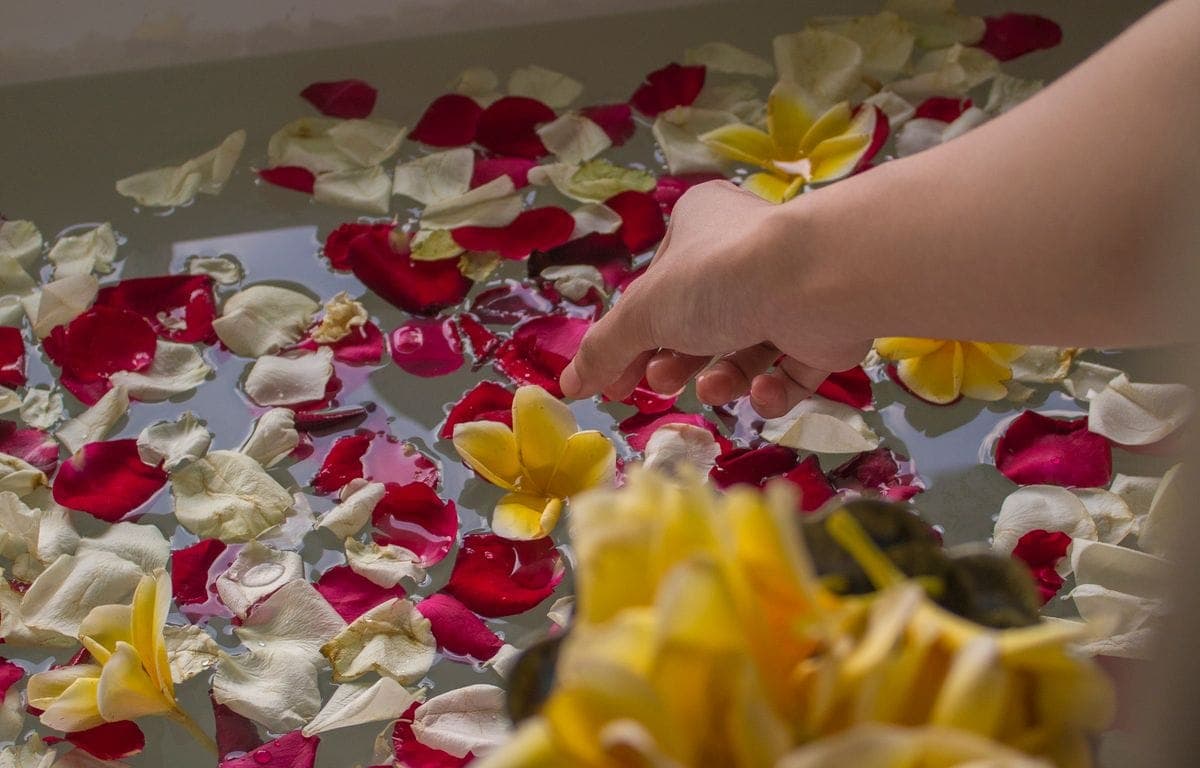
Start with the bath, where khus has always belonged. A few herbal bath drops swirled into a bucket of warm water turn an ordinary wash into something closer to the traditional practice — the full sequence is worth doing properly at least once a week, and the ten-minute ayurvedic bath ritual lays it out step by step.
Pair it with a cooling cleanser in the hot months; a cucumber soap bar keeps the whole routine on the same temperature register. Then finish with the mist once you're dry. Three small steps, and the shower starts doing what the khus tattie once did.
Everything here sits within the bath and shower range, which makes assembling the routine less of a hunt.
More than fragrance
One last thing worth knowing: the same deep roots that carry the scent also hold soil together, and vetiver is planted across the world specifically to control erosion on slopes and riverbanks. It asks for little water once established and gives back oil, craftwork and stable earth. Few crops earn their keep so many ways.
Khus never really left Indian life; it just moved from the window frame to the sharbat glass. Letting it into your bath and your body care is less a discovery than a homecoming — the coolest note of the subcontinent, back where it started.