Hair Care Guides
Scalp burning or itching after oiling: what's going on
03 Oct 2026 • Neemyukt Research Team
Hair oiling is supposed to be the relaxing part of the week. So when your scalp starts to prickle, sting or itch within minutes of a champi, or wakes you up itching the next morning, it is fair to wonder whether the oil is the problem, your scalp is the problem, or the way the two are meeting.
Usually it is one of a handful of fairly ordinary causes, and most of them can be sorted out by changing what goes on the scalp and how long it stays there. A few are not ordinary, and those need a doctor rather than a different bottle.
In short: Burning or itching after oiling is most often irritation from a strong ingredient (essential oils, camphor, pungent mustard oil), oil that is too hot, or oil sitting too long on a scalp that already has dandruff. Less often it is a true allergy. Wash the oil off with a mild shampoo, stop using that product, and get urgent care for facial swelling or breathing trouble; see a dermatologist for blisters, oozing or symptoms that do not settle within a few days.
Irritation or allergy: which one is it?
The two feel similar but behave differently. Irritation is the skin reacting to something harsh. It tends to start quickly, often within minutes, and it usually stings or burns more than it itches. It also scales with dose: more product, longer contact or broken skin makes it worse.
An allergic reaction is the immune system reacting to a specific ingredient it has become sensitised to. It more often shows up as itching, redness and small bumps a day or two after use, and it can spread beyond where the oil touched, onto the forehead, ears, neck or eyelids. Once you are allergic to an ingredient, even a small amount can set it off. MedlinePlus describes both forms under contact dermatitis, and the distinction matters because irritation often calms once you change your routine, while an allergy means avoiding that ingredient for good.
If you are trying a new oil, a quick trial on a small patch first saves a lot of trouble. That habit has its own guide: patch testing on the scalp.
The common causes, side by side
Most post-oiling discomfort traces back to one of the causes below. The timing and the feel of the reaction are the best clues.
| Likely cause | What it tends to feel like | What to try |
|---|---|---|
| Essential oils, camphor or menthol added to the oil | Tingling that turns to burning within minutes, worse on scratched skin | Switch to a plain or well-diluted oil; avoid adding your own drops |
| Oil heated too much | Immediate heat or stinging, sometimes redness where it was poured | Warm the bowl in water, test on your wrist, never apply hot |
| Pungent oils such as mustard oil used neat | Sharp, warming burn, especially on a sensitive or thin-skinned scalp | Dilute in a milder carrier or choose a gentler oil |
| Dandruff or seborrhoeic flare | Itch and flaking that build over a day or two, greasy yellowish scale | Shorter contact time, wash thoroughly; see a doctor if it persists |
| Old or rancid oil | Itch plus a stale, sharp smell from the bottle | Discard it; store oil away from heat and sunlight |
| True allergy to an ingredient | Itchy rash, bumps or swelling, may spread to face, ears or neck | Stop the product and see a dermatologist |
Strong additives and neat oils
Many hair oils, including home blends, are fortified with essential oils, camphor or menthol for their cooling tingle. That tingle is mild irritation by design, and on a scalp with tiny scratches from combing or nails it can tip into burning. Mustard oil has a naturally pungent compound that some people find too sharp on the scalp when used undiluted. Diluting strong oils into a gentler carrier often solves the problem; there is more on this in diluting a hair oil.
Temperature and contact time
Warm oil feels pleasant, but oil holds heat well and a scalp can be scalded before your fingers notice. Warm it gently in a bowl of hot water and check it on the inside of your wrist first. Leaving oil on for many hours in humid Indian weather, under a tight towel or on a sweaty scalp, also keeps skin damp and occluded, which can leave it itchy.
Could oiling be feeding a dandruff problem?
Sometimes the itch is not from the oil itself but from what it does to a scalp that already has dandruff. The yeast linked to dandruff feeds on the fats in scalp oil, and some plant oils may add to that supply, so heavy, long oiling on a flaky scalp can make itching and scaling worse rather than better. If your itch comes with persistent flakes, work out which kind you have before adding more oil; dandruff or dry scalp walks through the difference.
For a scalp like this, shorter oiling sessions (an hour before washing rather than overnight) and a thorough wash afterwards usually help. A supportive shampoo such as the neem bhringraj amla shampoo can clear oil without needing a harsh scrub. Stubborn dandruff that keeps coming back, though, often needs a medicated treatment such as ketoconazole, which a dermatologist can advise on.
What to do right now
If your scalp is burning, wash the oil out promptly with lukewarm (not hot) water and a mild shampoo. Do not scratch, and skip heat styling and tight hairstyles for a day or two. Stop using that oil until you know what caused the reaction.
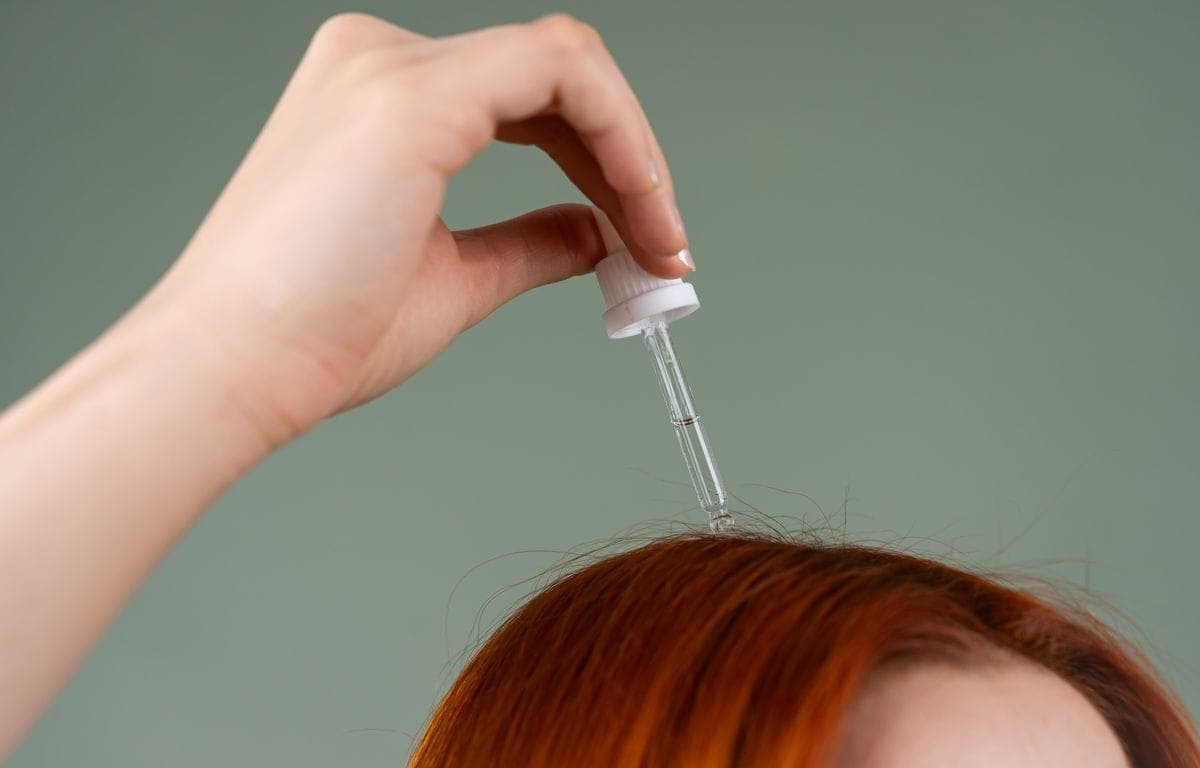
When things have calmed, reintroduce oiling slowly: a small amount, a shorter time, one product at a time. If you want an oil that is used for regular champi, choose one whose full ingredient list shows no added essential oils, camphor or menthol. If you try the neem argan hair oil, read its full label the same way and patch test it first like any new product.
When to stop and see a doctor
Home adjustments are fine for mild, short-lived irritation. See a dermatologist, or a general doctor if one is not available quickly, if you notice any of these:
Swelling of the face, eyelids, lips or tongue, or any difficulty breathing, is an emergency: go to the nearest hospital rather than waiting for an appointment. Blisters, oozing, crusting or raw patches on the scalp. A rash that spreads to the face, ears or neck. Pain, warmth, pus or fever, which can suggest infection. Patchy hair loss in the itchy area. Itching or burning that has not settled within a few days of stopping the oil, or that keeps returning.
A doctor can confirm whether this is irritation, allergy, seborrhoeic dermatitis, psoriasis or a fungal infection that needs antifungal treatment, and can arrange patch testing to pin down the exact ingredient if an allergy is suspected. That answer is worth having, because it tells you which labels to avoid for the long term.
Frequently asked questions
Is a slight tingle after oiling normal?
A light, cooling tingle from oils containing menthol or camphor is common and fades quickly. Burning, stinging that grows stronger, or itching that lasts after washing is not something to push through.
Can I be allergic to an oil I have used for years?
Yes. Allergies can develop after repeated exposure, so a product you tolerated for a long time can start causing reactions. Formulations also change, so check the label of a new bottle.
Does oiling a dry, itchy scalp help or hurt?
It depends on the cause. A genuinely dry scalp may feel better with light oiling, while a dandruff-prone scalp often gets itchier with long, heavy oiling. Diagnose first, then decide.
Should I switch to a different oil straight away?
Give your scalp a few days to settle before trying anything new, then introduce one product at a time so you can tell what works and what does not.