Body & Bath
Chicken Skin on Arms and Thighs: Understanding Keratosis Pilaris
14 Sept 2026 • Neemyukt Research Team
Run your hand down the back of your upper arm and you may feel it before you see it: a field of tiny, firm bumps, like fine sandpaper. Some are skin-coloured. Others sit inside a small pink or brownish halo, which is why people so often assume they are looking at a rash, an allergy or stubborn body acne.
It is almost always keratosis pilaris, one of the most common and least dangerous things skin can do. It favours the backs of the upper arms, then the fronts of the thighs, the buttocks and occasionally the cheeks, where it can look like a permanent flush. It is not an infection, it is not contagious, and it has nothing to do with how carefully you wash.
In short: Keratosis pilaris, the rough bumps most people just call chicken skin, happens when keratin, the protein that makes up the outer layer of skin, builds up and plugs the opening of a hair follicle, sometimes trapping a fine coiled hair underneath. It is harmless and chronic, so it cannot be cured, but it commonly softens with gentle chemical exfoliation and consistent moisturising, and it tends to fade on its own as people move into their thirties and forties. Scrubbing it harder makes it redder, not smoother.
What keratosis pilaris actually is
Each bump is a blocked follicle. Instead of shedding cleanly, dead keratin collects at the mouth of the pore and forms a hard little plug, and the hair that should have emerged sometimes curls up and stays trapped beneath it. That is the whole mechanism.
The American Academy of Dermatology describes keratosis pilaris as a harmless condition that often clears without treatment by around age 30, which matches what most people report: loudest in the teens and twenties, then a quiet retreat. Worth remembering, because plenty of people are selling a cure for something that usually resolves itself.
Why do some people get it and others never do?
It runs in families, clustering among parents, children and siblings, and it travels with the whole atopic package: naturally dry skin, eczema, hay fever, asthma. If your skin goes tight and flaky by the end of a shower, you are in the group most likely to have it.
That connection matters, because a barrier that loses water too fast produces a rougher, stickier surface layer, and rough sticky layers plug follicles more readily. Much of the improvement people get comes from fixing the dryness underneath rather than attacking the bumps.
Why does it flare in winter and in air-conditioned rooms?
Dry cold air and long hours under an air conditioner both pull moisture out of the top layer of skin. Humidity drops, the surface dehydrates, keratin stiffens, and the bumps turn more prominent and more visibly red. Many people notice their arms feel smooth through the monsoon and go coarse in December, and that a summer spent in an office at 18 degrees does the same thing a north Indian winter does.
Hot water compounds it, stripping the skin's own lipids and leaving that tight, prickly feeling afterwards. If that sounds familiar, the mechanics are covered in our piece on itchy skin after a shower, because the same fixes help both problems.
Is it keratosis pilaris, acne or folliculitis?
This is where people lose years, treating rough arms with spot creams or medicated powders that were never going to work. The three conditions feel different under the fingers.
| Feature | Keratosis pilaris | Body acne | Folliculitis |
|---|---|---|---|
| Texture | Uniform sandpaper roughness, dozens of small even bumps | Varied sizes, some raised and tender | Small pustules with a visible white or yellow head |
| Usual sites | Backs of upper arms, front of thighs, buttocks, cheeks | Chest, upper back, shoulders | Anywhere hair grows, often thighs, buttocks, beard area |
| Symptoms | Usually painless, sometimes mildly itchy or dry | Can be sore or inflamed | Often itchy, stinging or tender |
| Course | Chronic, stable for years, better in humid weather | Flares in cycles | Comes on over days, may spread |
| What it needs | Gentle exfoliation and moisture | Acne-directed care | Medical assessment; some cases need antifungal or antibiotic treatment prescribed by a dermatologist |
Ingrown hairs form a fourth category and often overlap with keratosis pilaris on the legs, which we cover in our guide to strawberry legs and ingrown hairs.
Why scrubbing harder makes it worse
Because the plug is not dirt, and you cannot sand it out. Aggressive physical scrubbing inflames the surrounding skin, so pale bumps turn pink, pink ones turn red, and the barrier you needed to repair ends up more damaged than when you started. Daily scrubbing with a loofah, a pumice stone or a gritty salt scrub produces exactly this.
Dissolving the plug works better than abrading it. Salicylic acid is oil-soluble, so it works its way down into the follicle and loosens the keratin plug from within; the chemistry is explained in our beginner's guide to how salicylic acid works inside a pore. Lactic acid works at the surface while drawing in water, and urea does both, softening keratin and hydrating at once.
What genuinely helps
Gentle chemical exfoliation, two or three times a week
Start low and infrequent. A leave-on lotion with salicylic, lactic or glycolic acid, or a urea cream, used on the affected areas a few evenings a week, has the best track record. Daily application from day one usually ends in stinging and an abandoned routine.
Cheeks are a different matter. Facial skin is thinner and reacts harder, so start there with nothing more than a plain moisturiser, and ask a dermatologist before putting a body-strength acid anywhere on your face.
Moisturising on damp skin, every day
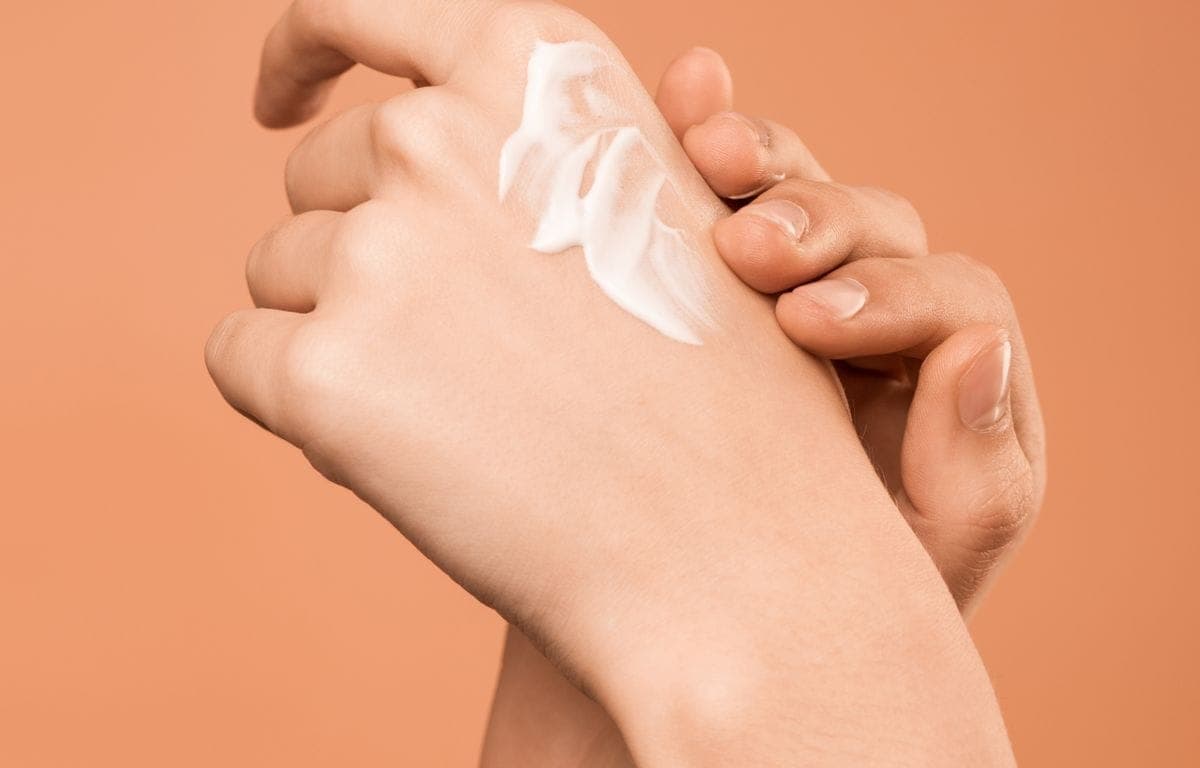
This is the half people skip, and it does more work than the acid does. Pat down after a shower, leave the skin slightly damp, and moisturise within a couple of minutes so water is sealed in rather than lost. A light neem and aloe body lotion suits humid months and daytime use. When arms and thighs feel genuinely parched in winter, a richer neem and shea barrier cream holds better overnight.
Shorter, cooler showers and a cleanser that does not strip
Five to ten minutes, warm rather than hot, and a non-stripping wash changes how skin feels an hour later. Sulphate-heavy formulas leave the barrier flat. A clarifying option such as a neem body wash cleans without that squeaky finish.
How long it takes, and what not to do
Give it four to eight weeks of consistency before judging anything. Texture softens first, redness settles later, and results hold only while the routine continues. Stop for a month and the bumps come back, which is frustrating but simply reflects a chronic tendency rather than a one-time problem.
Four things reliably set people back:
- Picking or squeezing bumps, which leaves brown marks that outlast the bumps themselves.
- Daily harsh loofah use.
- Waxing over actively inflamed areas.
- Stacking three strong acids at once to speed things up.
When should you see a dermatologist?
Book an appointment if the bumps are intensely itchy, weeping, painful or spreading quickly. Go too if they have pus-filled heads, which suggests a folliculitis that needs antifungal or antibiotic treatment from a doctor. And go if you have been treating the area as acne for months with nothing to show for it. Prescription-strength urea, retinoids and laser options exist for stubborn cases, and a five-minute look in person settles the diagnosis faster than any amount of reading.
Rough arms are not a hygiene failure or a flaw to be scrubbed away. They are a common, harmless quirk of how some skin sheds, and treating them kindly, with mild acids, daily moisture and gentler showers, is the approach that works best and does the least harm.
Frequently asked questions
Will keratosis pilaris ever go away completely?
There is no cure, and honest advice says so. It commonly fades through the late twenties and thirties, and can appear to vanish in humid weather, but the underlying tendency stays. Management, not elimination, is the realistic goal.
Can I shave or wax over the bumps?
Shaving is usually fine with a sharp blade, a slippery base and short strokes. Waxing over inflamed or broken bumps is not, because it lifts irritated skin along with the hair. Wait until the area is calm, and moisturise well afterwards.
Is it caused by poor hygiene, or by something I eat?
Neither. It is a genetic tendency in how keratin sheds around the follicle. Washing more often does not help and washing aggressively makes it worse. No specific diet has been shown to clear it, although keeping skin well hydrated from the outside clearly helps how it looks.
Do body scrubs help at all?
Occasionally and gently, yes. A soft scrub once a week can smooth the surface and feels pleasant, but it is not the fix for keratosis pilaris and should never be used to force plugs out. The leave-on acid and the daily moisturiser are what change texture over time.