Hair Care Guides
Hibiscus for hair: what the flower is actually doing in a conditioner
11 Oct 2026 • Neemyukt Research Team
A conditioner named after hibiscus gives the flower all the credit: front of the pack, often the colour of the cream, usually a line about old Indian hair care. What the flower is not is the ingredient doing most of the work on wet hair.
That is not an argument against buying one. It is an argument for knowing what you are paying for, and it applies to the neem aloe hibiscus conditioner on this site, ₹979 for 200ml, as much as to anything else on a shelf.
In short: Hibiscus adds genuine slip through its mucilage and brings some antioxidant content with it, but the detangling and softness you feel come mainly from a conditioner's conditioning agents: cationic surfactants, fatty alcohols and emollients. An extract sitting near the end of an ingredient list is a supporting player, not the engine. Hibiscus does not stop hair fall and it does not regrow hair.
What is actually softening your hair?
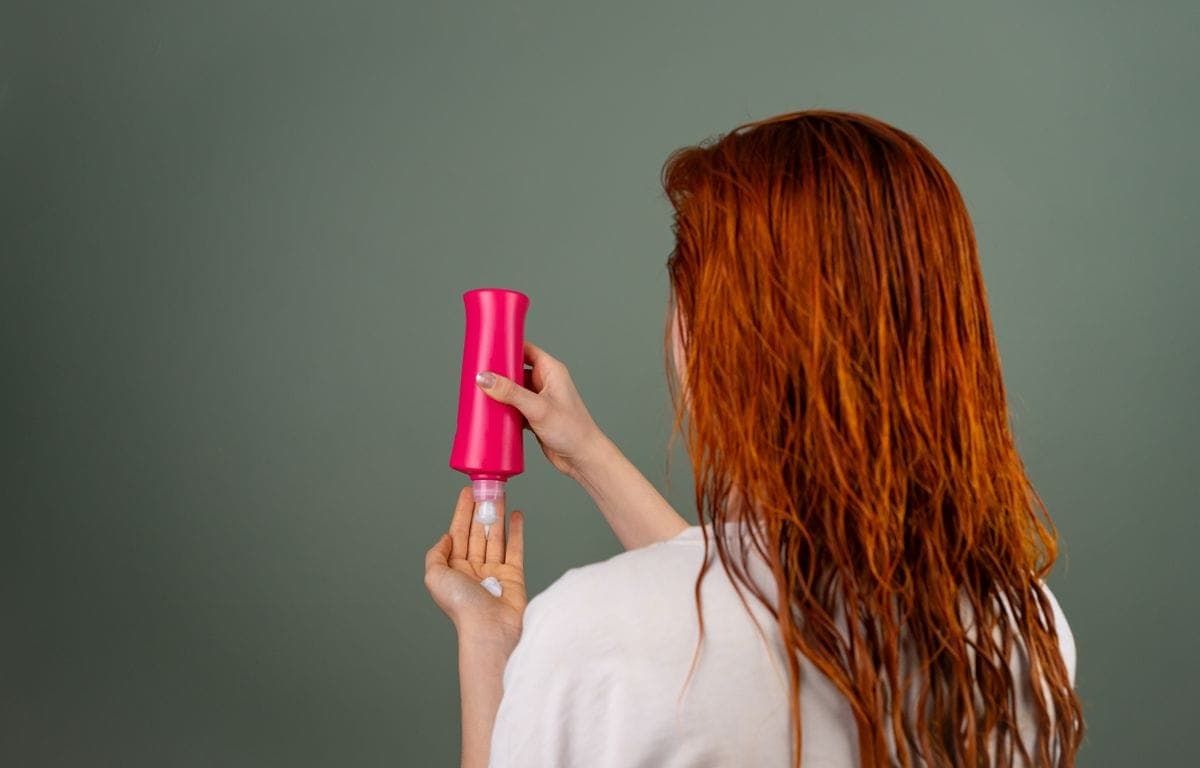
Hair carries a negative charge on its surface at normal wash pH. Sun, heat, hard water and colour make it more negative still, and conditioners are built to exploit that. Cationic surfactants such as behentrimonium chloride, cetrimonium chloride and behentrimonium methosulfate carry a positive charge, so they are drawn to the roughest, most damaged patches of cuticle and stay there through the rinse. That thin deposit flattens the cuticle, cuts friction between strands and lets a comb travel.
The rest of the bottle supports that. Fatty alcohols such as cetearyl and cetyl alcohol give the cream body and smooth in their own right. Emollients add gloss and seal the surface: silicones in conventional formulas, lighter plant esters and vegetable oils in the ones that skip them. A mildly acidic pH helps the cuticle lie flat. The American Academy of Dermatology advises conditioning after every shampoo for the same reason: less friction, less breakage.
Swap the hibiscus out of a formula and the product feels slightly different. Take the cationic system out and it stops being a conditioner.
So what is the hibiscus doing?
Mucilage is the real contribution. Hibiscus flowers and leaves contain polysaccharide mucilage, the slippery material that makes a crushed-flower paste feel gelatinous. In a formula it adds a soft, cushioned slip and helps a wide-tooth comb move through wet lengths. This part you can feel.
The antioxidant content is real but brief. Anthocyanins and flavonoids from the flower have been studied in laboratories for antioxidant activity. A rinse-off conditioner gives them roughly a minute of contact before it goes down the drain, so treat it as a bonus rather than a reason to buy.
Acidity and amino acids are present and minor. The pH and the feel of a finished conditioner are set by the formulator, not by a fraction of a percent of extract.
What the flower is and how Indian households have long used it is covered in the earlier post on hibiscus for hair. The narrower question here is how much of that survives into a bottle.
Meaningful inclusion or decoration?
Below roughly 1%, ingredient order on a label is not a ranking. Botanical extracts nearly always sit below that line, which is normal rather than damning, because extracts work at fractions of a percent. What separates a considered inclusion from a decorative one is how specific the brand will be about it, a habit that works for any botanical on any label and the subject of reading neem product labels properly.
| What the label shows | What it usually means | How much weight to give it |
|---|---|---|
| Hibiscus named above the preservative and fragrance | Possibly a meaningful level, though order below about 1% is not a ranking | A reasonable sign |
| Hibiscus named last, after the colourant | Probably low, though position alone proves little | Fine, but do not pay extra for it |
| The form is specified: flower or leaf, extract or water, standardised to a named compound | A deliberate formulation choice | The strongest signal a shopper gets |
| Hibiscus on the front, nothing matching in the ingredients | Copywriting, not formula | Ignore it |
| The flower credited with regrowth or stopping hair fall | Marketing ahead of the evidence | Read that whole label sceptically |
Colour misleads most people. Anthocyanins are unstable to light, heat and shifts in pH, so an extract at a realistic level rarely tints a cream deeply. A strong pink is usually a separately listed colourant, which is fine unless the shade is sold to you as proof of potency.
Which hair actually benefits?
Dry, coarse, wavy and curly hair gains most, along with hair that is coloured, chemically straightened or heat-styled often. Those strands carry the most cuticle damage, so they offer the most binding sites, and they are where extra wet slip prevents real breakage during detangling.
If slip is what you are after, the neem aloe hibiscus conditioner comes in a 200ml bottle at ₹979. For coarse, very dry or rough ends, an argan-led formula usually feels richer through the mid-lengths, and the neem argan conditioner is ₹1049 for the same size. They are pre-launch, so you can register interest but not order them.
Fine hair and oily roots gain least and can end up limp. Keep conditioner to the mid-lengths and ends, rinse properly, and judge it by the next morning rather than by the shower.
What hibiscus will not do
It will not prevent hair fall and it will not regrow hair. The flower has a long reputation in Indian hair care for both, and long use is not evidence. Published work on hibiscus and hair growth is largely laboratory and animal research, a fair place to start a question and not a place to finish one. A rinse-off conditioner worked through the lengths is unlikely to change what a follicle does.
A widening parting, a ponytail thinner than a year ago or a receding hairline belongs with a dermatologist, who can prescribe treatments with real evidence behind them, generic minoxidil among them, and check for the thyroid and iron problems behind a lot of shedding in India. The same limits are set out in what a hair oil can and can't do for pattern hair loss, and they apply to a conditioner at least as strictly.
Frequently asked questions
Is a hibiscus conditioner better than one without it?
Not automatically. Compare the conditioning base, the texture and how your hair feels dry the next day. Hibiscus is a fair reason to prefer one good conditioner over another, never a reason to accept a poor one.
Does a deeper pink mean more hibiscus?
No. The flower's pigments fade quickly with light and heat, so a vivid shade in a shelf-stable cream is usually an added colourant. Check the ingredient list for one.
Can a homemade hibiscus rinse do the same job?
It gives you the mucilage slip, which is pleasant and nearly free if you have a plant. It cannot give you the cationic deposit that does the actual conditioning, so expect a softer wet feel and less difference once hair dries. Use it fresh, since a home preparation has no preservative.
Should I leave it on longer for more benefit?
A couple of minutes is enough, since most of the binding happens quickly. That time is better spent detangling with a wide-tooth comb while the product is still in.