Hair Care Guides
Heat Styling Without Regret: A Damage-Control Playbook
24 Jun 2026 • Neemyukt Research Team
Nobody who owns a straightener needs a lecture about not using it. You'll use it — for the wedding season, the office presentation, the photos. The realistic question isn't whether to heat-style but how to do it so your hair doesn't pay for every good hair day with a week of rough, brittle ends.
Think of this as a damage-control playbook: what heat actually does to hair, and the habits before, during and after styling that decide how much of that damage you take home.
What a hot tool actually does to a strand
Hair is mostly keratin — protein — plus a small amount of water held inside the fibre. Heat attacks both. Above roughly 150°C, keratin begins to lose its structure, and the natural moisture inside the strand turns to steam. Trapped steam is the nastier problem: it expands and can rupture the cuticle from within, leaving tiny blisters and cracks along the shaft.
This is why heat damage feels the way it does — porous, straw-like, frizzy in humidity, prone to snapping at the ends. And it's cumulative. One blow-dry does little; the same blow-dry three hundred times, unprotected, is how "my hair used to be so thick" stories start. The fibre can't heal, so everything below is about slowing the rate of damage.
Rule one: never iron wet or damp hair
If you take a single line from this post, take this one. Water inside the strand plus a 180°C plate equals instant steam and audible sizzling — that sound is the cuticle bursting. Flat irons and curling wands belong on completely dry hair only.
Blow-drying is the exception, since it's designed for wet hair, but even there the smart move is to let hair air-dry to about seventy or eighty per cent before the dryer touches it. Less water to drive off means less time under heat.
Cooler than you think: getting the temperature right
Most irons run far hotter than most hair requires. Fine or colour-treated hair generally behaves at 130–150°C; medium hair at 150–170°C; only very thick, coarse hair justifies going near 180–200°C. If your tool has no temperature control, that alone is a reason to replace it.
One slow, deliberate pass at a moderate temperature beats three rushed passes at maximum. Repeated passes over the same section multiply exposure — exactly what you're trying to avoid.
The prep: coat before you cook
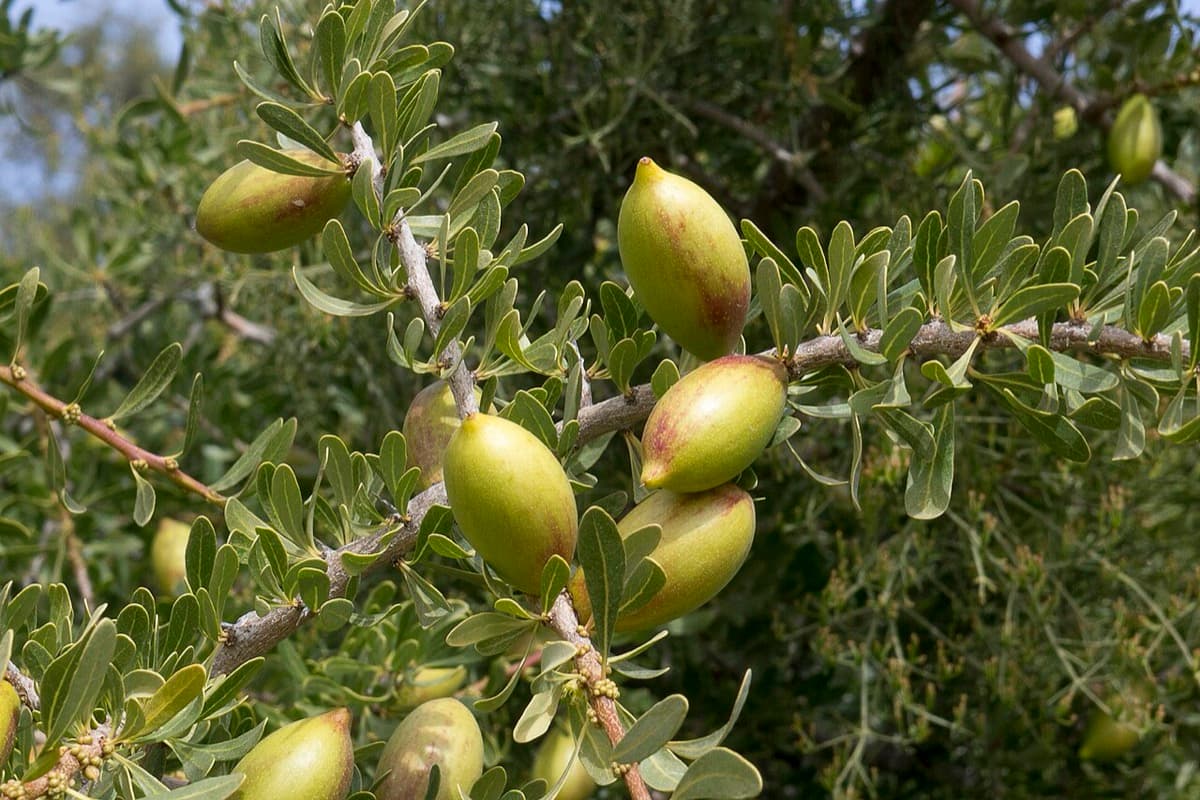
A leave-on layer between your hair and the plate makes a measurable difference. Film-forming ingredients spread the heat more evenly across the strand and slow the temperature spike at the surface, the way a tawa spreads a flame. Silicones do this best; plant esters and proteins do a lighter version of the same job. Work a coin-sized amount of an argan smoothing serum through dry lengths and ends before the tool comes anywhere near them — argan oil brings a bonus dose of vitamin E and fatty acids, and the serum format won't weigh hair down the way raw oil can before ironing. Being straight about it: ours is silicone-free, so if you flat-iron daily at high heat, a dedicated silicone-based protectant will shield more than it does.
What not to use as heat prep: heavy coconut or mustard oil straight on the lengths. Thick raw oils can overheat against a hot plate and essentially fry the surface of the strand. Save proper oiling for the pre-wash ritual, where it genuinely belongs — more on that in our piece on where serums end and oils begin.
The aftermath: repair is a routine, not a rescue
Heat-styled hair loses lipids and surface protein faster than untouched hair, so it needs those returned on schedule, not just when things look desperate.
Conditioner after every single wash is non-negotiable — a smoothing conditioner with silk protein deposits exactly the kind of surface reinforcement heat strips away. Left on for two to three minutes, mid-lengths to ends, it quietly rebuilds slip and shine between styling sessions. If you're vague on technique, our rundown of common conditioner mistakes is worth five minutes.
Beyond that, trim the ends every eight to twelve weeks. Split ends travel upwards if ignored, and no product re-fuses a split — anything claiming otherwise is glueing it shut until the next wash.
Know your hair's limit
Some weeks demand daily styling; most don't. Two or three heat sessions a week is a workable ceiling for healthy hair. On off days, lean on heat-free alternatives — overnight braids for waves, a smoothing serum and a good brush for polish. Humidity will try to sabotage the result either way; our monsoon frizz guide covers keeping a style alive when the air is 90 per cent water.
Watch for the warning signs that your hair is over its limit: ends that snap when you stretch a dry strand, frizz that conditioner no longer fixes, and hair that dries unnaturally fast (a sign it's become porous). When those appear, drop the tools for a few weeks and double down on conditioning — the full hair care range has the repair side covered.
Heat styling is a trade, not a sin. Pay in preparation — dry hair, moderate temperature, a protective layer — and settle the balance afterwards with conditioning and trims, and you can keep both the straightener and the hair. Skip the payments and the interest compounds, one pass at a time.