Body & Bath
Body lotion, body butter or body oil: which one does your skin need?
16 Sept 2026 • Neemyukt Research Team
Walk down any body care aisle in India and you'll find the same three formats side by side: a thin lotion, a thick butter, and a bottle of oil. The labels talk about nourishment and glow, which tells you nothing about which one your shins actually need in January. The real difference isn't marketing. It's how much water each one contains, and what happens to that water on your skin.
In short: Body lotion is mostly water with oil dispersed through it, so it absorbs fast and suits humid weather and daily use. Body butter carries far more fat and much less water, so it sits longer and suits dry winters and rough areas like shins and knees. Body oil contains no water at all, so it seals rather than hydrates, which makes it a layer to apply over damp skin rather than a standalone moisturiser.
What actually separates a lotion, a butter and an oil?
All three deliver fat to your skin. What changes is the vehicle carrying it.
A body lotion is an oil-in-water emulsion: water is the continuous phase, with oil droplets suspended in it. Because water dominates, lotion spreads thin, sinks in fast and leaves almost no film. That light feel isn't weakness, it's the water evaporating as designed.
Body butters split into two camps. Some are anhydrous whipped blends that are pure fat with no water at all. Others are thick emulsions that still contain water but carry far more oil than any lotion. Either way fat dominates the feel, which is why butters feel suffocating in a Mumbai monsoon and feel like relief in a Delhi December.
A body oil is anhydrous by definition. With no water in the bottle, it can't hydrate skin the way most people assume. What it does is slow the rate at which water already in your skin escapes.
You can check any of this yourself without trusting the front label. If aqua or water is the first ingredient, it's a water-based product whatever the tub is called. If the first ingredient is a butter or an oil, there's no water in it at all.
Humectants, emollients and occlusives, in plain terms
Humectants such as glycerin, urea and aloe pull water in, from deeper skin and from humid air. That's why a glycerin-only product can feel like it's doing less in a dry inland winter, with less atmospheric moisture to work with. Emollients, the lighter fatty acids and plant oils, fill the gaps between surface cells and turn a flaky patch soft. Occlusives, the heavier butters and waxes, form a barrier that slows water loss outward. The American Academy of Dermatology's guidance on relieving dry skin follows the same logic: moisturise while skin is still damp, so there's water present to trap.
Why body skin behaves differently from face skin
Oil gland density varies sharply across the body. The face, chest and upper back carry many. Shins, forearms and outer thighs carry few, which is why winter itch usually starts on the lower legs. The stratum corneum, the outermost layer of flattened, already-dead cells, varies too. On heels it's dramatically thicker and load-bearing, so an arm lotion can't soften it. Those areas want occlusion and overnight coverage under a sock. That's the job a denser, targeted product like a neem tea tree foot cream is built for. It's daily upkeep, not a fix for heels that are already cracked and painful.
| Feature | Body lotion | Body butter or rich cream | Body oil |
|---|---|---|---|
| Structure | Oil-in-water, water dominant | Anhydrous, or an emulsion with far more oil | Anhydrous, no water |
| Adds water | Yes, directly and via humectants | Some, if it has a water phase | No, it only seals what's there |
| Feel | Light, absorbs in a minute | Heavy, lasting film | Slippery, then thin residue |
| Best climate | Humid summers, monsoon, southern year-round | Dry winters, hills, heavy AC exposure | Any, layered over damp skin |
| Best areas | Torso, arms, daily all-over cover | Shins, knees, rough patches | Legs and arms after a bath |
| Limitation | May not hold through a dry winter day | Sticky in humidity, can clog chest and back | Does little for dehydrated skin alone |
Which format suits Indian weather?
India doesn't have one climate, so it can't have one right moisturiser. In humid coastal summers, skin loses water slowly and heavy occlusives trap sweat and can aggravate chest and back breakouts. A light lotion after bathing is usually enough, and humectants perform well with moisture in the air to work with. A daily-wear formula such as a neem aloe body lotion fits that brief.
Dry north Indian winters flip it. Legs, arms and hands want richer, more occlusive cover, because a light lotion often won't hold through the day. Air conditioning is the underrated third case, nine hours a day in dehumidified air. If your skin feels fine on Sunday and tight by Wednesday evening, the office is the variable, not the weather.
How should you layer oil and lotion?
Water-based first, oil-based second. Oil applied first forms a barrier the lotion then has to fight through, wasting both. The three-step body care framework shows how cleansing, hydrating and sealing fit together.
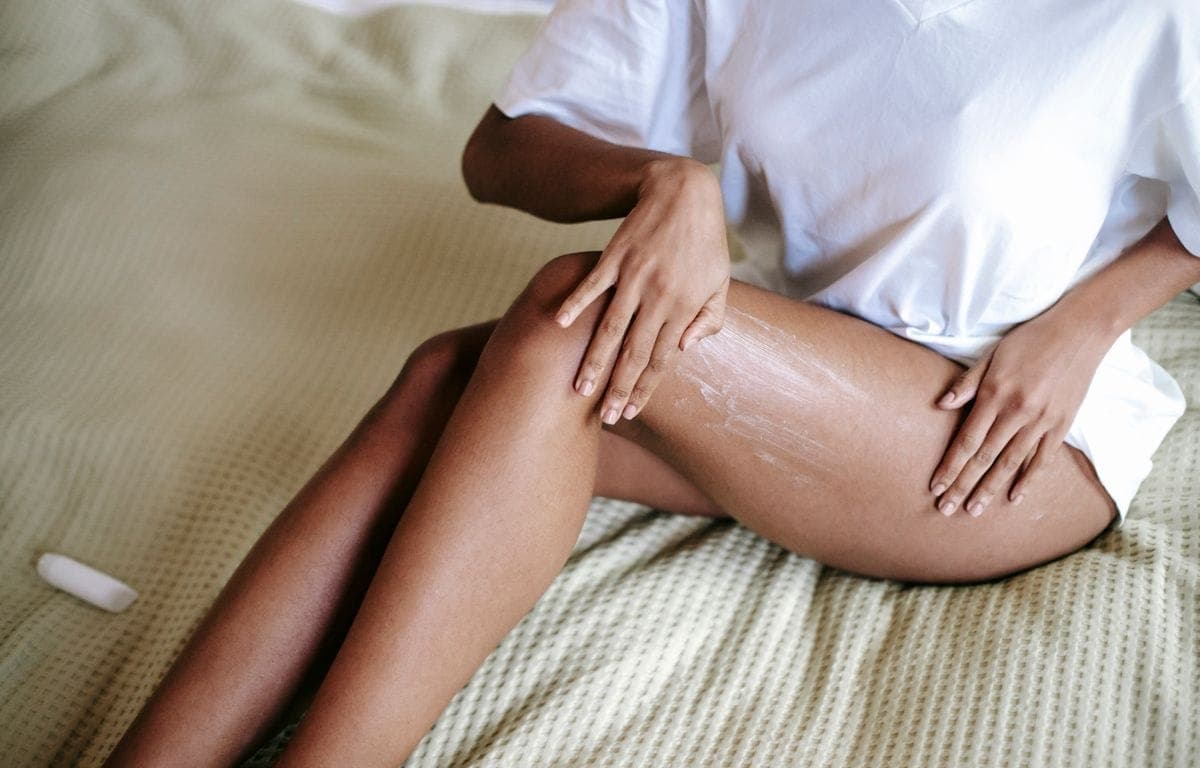
The damp-skin window matters more than the products. Towel off until you're no longer dripping but still faintly damp, then moisturise within a few minutes, before the skin dries fully. That traps the water your skin absorbed while bathing. This one habit often beats switching to something pricier, and it's tied to why skin turns itchy after a hot shower.
On a dry winter night, a workable sequence is:
- A rich cream over the body, while skin is still damp.
- Oil on the shins, over the cream, to seal it in.
- Something denser on elbows and knuckles, where a concentrated neem shea barrier cream is more practical than butter everywhere.
Shea earns its reputation on exactly this job, as this look at shea butter behaving predictably on dry skin explains.
What a moisturiser can't do
No format permanently repairs skin. Moisturisers are maintenance: they add water, smooth the surface and slow water loss for some hours, then the effect fades and you reapply. Neem, shea and aloe are useful emollients and humectants with a long record of traditional use, but a cosmetic moisturiser isn't a treatment and shouldn't be bought as one.
Some dryness isn't dryness. See a dermatologist rather than cycling through formats if you notice:
- Scaling that returns within hours of moisturising
- Itching that disturbs your sleep
- Weeping or oozing patches
- Thick plaques with a silvery scale
- Ring-shaped patches with a raised edge
- Cracks deep enough to bleed
Those point to conditions like eczema, psoriasis or a fungal infection needing antifungal treatment prescribed by a doctor. Leaving them unchecked usually makes them harder to settle.
Frequently asked questions
Can I use coconut oil instead of body lotion?
Alongside one, yes; instead of one, no. Coconut oil is anhydrous, so it seals moisture rather than supplying it, and on already-dehydrated skin it leaves the surface soft while the dryness underneath persists. Apply it over damp skin or over a lotion, and go carefully on the chest and back, where heavier oils aggravate body acne in some people.
Is body butter too heavy for Indian summers?
In humid regions, usually yes as an all-over product, because it traps sweat when the air is already saturated. Keep it for areas that stay rough year-round, such as shins and knees, and use a lighter lotion elsewhere. In dry inland summers, a medium-weight cream can still feel comfortable.
What if I can't moisturise right after a shower?
Apply it whenever you can, it still helps, just less. The outer layer absorbs water during a shower and starts losing it almost immediately afterwards, so product applied to fully dry skin has less to trap. If your routine makes the damp window impossible, change the shower instead: cooler water and a shorter wash strip less to begin with, which lowers how much the timing costs you.
Why are my legs dry when the rest of me is fine?
Shins have far fewer oil glands than your chest, back or face, so there's less natural oil to work with. Hard water leaves a residue that makes the surface feel rougher, and shaving takes off a thin layer of the stratum corneum along with the hair. Stack those on winter air and the lower legs show it first. Treat them as a separate zone with a richer product rather than expecting one lotion to serve the whole body equally.